Study Skills System: Focus, Recall & Weekly Study Plan
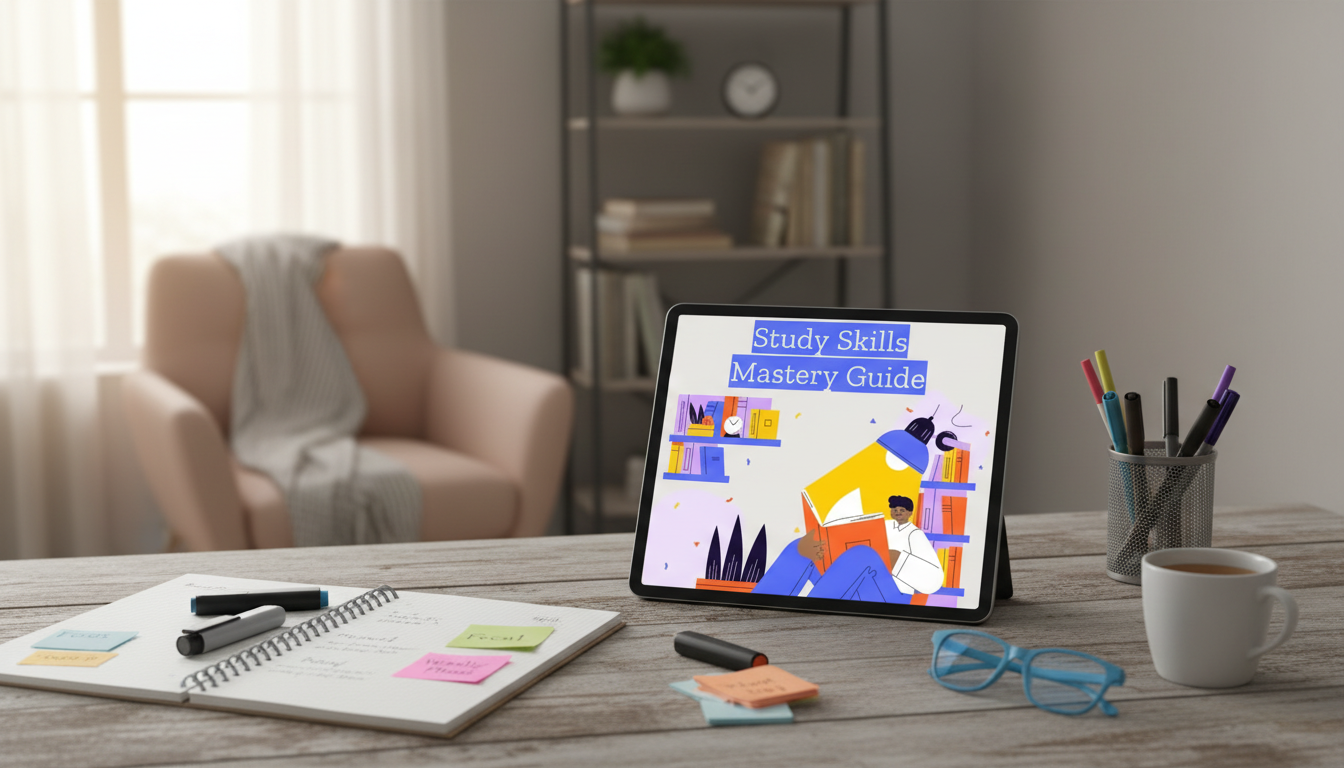
Study Skills Mastery Guide: A Practical System for Focus, Memory, and Better Study Sessions
Strong study results usually come from a repeatable system: clear goals, focused work blocks, active recall, and simple tracking. When the routine is consistent, sessions feel more organized, distractions shrink, and material sticks longer. This guide breaks study skills into usable habits you can apply today—plus a ready-to-use digital companion to make the system easier to follow.
Start With a Simple Study System (Not More Hours)
Progress speeds up when each session has a purpose and a finish line. Instead of “study Chapter 6,” set one measurable outcome, such as “solve 15 practice problems” or “recall key terms without notes.” A single outcome reduces decision fatigue and makes it obvious when you’re done.
- Set one outcome per session: choose a target you can complete in 25–90 minutes.
- Use a short planning ritual: pick tasks, estimate time, choose resources, and define what “done” looks like.
- Build consistency with defaults: same start time, same location cues, same first task (for example, a 2-minute warm-up quiz).
- Track only a few metrics: sessions completed, practice questions attempted, and topics reviewed.
If motivation is inconsistent, reduce the “startup cost.” Keep materials together and set up the night before. A dedicated carry-all can help if you study on campus or between shifts; the Vintage Design Fashion Shoulder Messenger Bag works as a single place for notebooks, flashcards, and a charger.
Focus Tactics That Reduce Distractions Fast
Focus isn’t a personality trait—it’s an environment plus a plan. When distractions hit, the goal is to recover quickly without turning the session into a negotiation.
- Create a distraction capture list: when an interruption pops up (“email advisor,” “look up a term”), write it down and return to the task.
- Use timed work blocks: 25–45 minutes of work with short breaks. After consistency improves, extend the block length.
- Prepare the environment: clear the desk, open only required tabs, and keep your phone out of reach or on Do Not Disturb.
- Front-load the hardest task: put the most demanding work in block one, when mental energy is highest.
- Use a restart cue: stand up, take one deep breath, reread the next action, and continue.
Quick fixes for common focus problems
| Problem | What to do in 60 seconds | What to change for next session |
|---|---|---|
| Checking phone repeatedly | Put phone in another room; start a 25-minute timer | Enable app limits and schedule phone checks only during breaks |
| Reading but not absorbing | Write 3 questions from the page headings | Switch to active recall (flashcards, self-quizzing) instead of re-reading |
| Procrastinating the start | Open materials and write the first tiny step (2 minutes) | Use a fixed start routine and pre-plan tasks the night before |
| Losing track of time | Set a visible timer and a single goal for the block | Time-block tasks and keep a short end-of-session log |
Timed blocks are popular for a reason. If you want a simple structure, the Pomodoro approach (work sprints + short breaks) is a practical starting point; the original method is outlined by the creator here: Pomodoro Technique.
Study Methods That Actually Build Understanding
If studying feels long but results feel thin, the issue is usually passivity. Understanding improves when you try to retrieve and apply information—then correct what you missed.
- Active recall: close notes and retrieve key ideas from memory; then check and correct.
- Spaced repetition: revisit material across multiple days instead of cramming in one sitting.
- Interleaving: mix problem types or topics to strengthen flexible thinking and exam readiness.
- Practice-first: attempt questions before reviewing solutions to expose gaps quickly.
- Teach-back: explain the concept out loud in simple terms; note where explanations break.
Retrieval practice (self-testing) is strongly supported in learning science. A clear overview is available from the American Psychological Association: Practice Testing (Retrieval Practice).
Memory Techniques for Exams, Languages, and Dense Reading
Memory improves when information is organized and revisited at the right times. You don’t need complicated tricks—you need a few reliable tools used consistently.
Spacing works because the brain gets multiple “rebuilds” of the memory over time. For a quick explanation of the spacing effect, see: Spacing Effect.
A Weekly Plan That Prevents Cramming
Study Checklist: What to Do Before, During, and After Each Session
Digital Tools That Make the System Easier to Follow
Study Skills Mastery Guide: A Ready-to-Use Digital Study Companion
If building a system from scratch feels like one more assignment, a ready-made guide can help you start immediately and refine as you go. The Study Skills Mastery Guide (digital study guide + checklist PDF) is designed as a practical companion with learning strategies, focus tips, study methods, memory techniques, and a clear session checklist.
FAQ
How many hours should a good study session be?
Aim for short, consistent blocks (about 25–45 minutes) with breaks; total time depends on workload, but quality matters more than long sessions. If you’re using active recall and practice questions, even 60–90 minutes can be very productive.
What is the fastest way to improve memory for studying?
Use active recall and spaced repetition first, since they directly train retrieval and long-term retention. Add chunking or a simple mnemonic for lists, and protect sleep—reviewing the same day and briefly before bed can help retention.
Is re-reading notes an effective study method?
Re-reading can feel productive but is often passive, especially if it isn’t paired with retrieval. For stronger retention, switch to self-quizzing, practice questions, and teach-back so you’re forced to recall and apply the material.












Leave a comment