Talk & Connect: Easy Prompts for Stronger Family Bonds

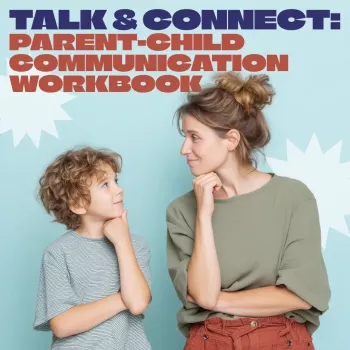
Talk & Connect: A Parent-Child Communication Workbook for Stronger Bonds
Busy days, big feelings, and short answers can make family conversations feel harder than they should. A simple structure—short prompts, shared reflection, and repeatable connection rituals—can help kids open up and help parents respond with clarity and calm. This guide breaks down practical ways to build emotional connection through everyday moments, with a workbook-based approach that makes it easier to stay consistent.
Why communication is the foundation of a strong family bond
Strong family relationships are built less through “big talks” and more through small, frequent moments of feeling seen. When kids know they can share without getting judged, lectured, or immediately “fixed,” they’re more likely to keep talking—especially when life is messy.
- Connection grows in the small stuff: quick check-ins, car rides, bedtime wind-downs, and tiny traditions.
- Safety beats pressure: kids share more when they don’t expect criticism or a rapid-fire solution.
- Emotion coaching builds skills over time: naming feelings helps children learn regulation and coping.
- Predictable check-ins reduce conflict: needs are addressed earlier, before they spill out as blowups.
- Workbooks reduce the “what do I say?” problem: a shared script lowers pressure for both parent and child.
For additional parenting and communication guidance, trusted sources like HealthyChildren.org from the American Academy of Pediatrics and the CDC’s Positive Parenting Tips can be helpful references.
What makes a communication workbook useful (especially on hard days)
Even the most patient parent can go blank after a long day. A workbook offers a neutral, repeatable structure you can return to when everyone is tired, stressed, or stuck in a cycle.
- Ready-to-use starters: no brainstorming required when energy is low.
- A calmer container for sensitive topics: school stress, friendship drama, worries, or changes at home.
- Balances listening and guiding: the child feels heard without the parent feeling powerless.
- Supports repair after conflict: structured reflection makes “resetting” more doable.
- Tracks patterns over time: triggers, calming strategies, and what support actually works.
Talk & Connect workbook: how it supports positive parenting habits
If you want a simple tool to make communication more consistent, consider the Talk & Connect: Parent-Child Communication Workbook. It’s designed to strengthen emotional connection through guided prompts and shared activities that feel approachable—not formal or clinical.
- Builds respectful communication skills like taking turns, reflecting feelings, and asking open questions.
- Fits real life with quick check-ins, longer weekly sessions, and post-conflict resets.
- Encourages progress over perfection, which keeps kids (and parents) from shutting down.
- Works well for parents, caregivers, and blended families who want a common “language” for tough moments.
Conversation rituals that make kids more likely to open up
Rituals work because they remove uncertainty. Kids know what’s coming, how long it will last, and that they won’t be trapped in an endless talk.
- Two-minute check-in: one feeling word + one highlight + one hard moment.
- Side-by-side talk: chat while walking, driving, cooking, or doing a puzzle to lower pressure.
- Curiosity first: ask what happened and how it felt before offering advice.
- Name it to tame it: reflect the emotion you hear (“That sounds disappointing.”).
- Repair and reconnect: after conflict, use a calm script—what happened, what was felt, what can help next time.
Side-by-side chats can be especially effective during car rides. For families working on calmer, safer rides that make conversation easier, a supportive setup like the Child Car Booster Seat for calmer, safer rides and easier side-by-side talks can help turn driving time into low-pressure connection time.
Easy prompts by age and situation
Prompts work best when they match a child’s developmental stage. Younger kids do better with concrete choices and play; older kids benefit from curiosity and collaboration; teens need respect and autonomy above all.
Quick conversation starters by age and moment
| Moment | Ages 4–7 | Ages 8–12 | Teens |
|---|---|---|---|
| After school | Show with fingers: 1–5, how was today? | What was the best part and the hardest part? | Anything you want me to know before homework/activities? |
| Conflict with sibling | What did you want? What did they want? | What felt unfair, and what could be tried next time? | What boundary needs to change so it doesn’t repeat? |
| Big feelings | Where do you feel it in your body? | If the feeling had a color/weather, what would it be? | What’s the story your brain is telling—does it feel true? |
| Before bed | One good thing, one thank-you, one wish | What’s something you’re proud of today? | What’s on your mind that could make tomorrow easier? |
When a child shuts down
If you’re met with silence, try offering options instead of pushing for words: “Want to talk now, write it down, or circle back at 7:30?” The goal is to keep the door open while protecting your child’s sense of control.
Making it stick: a simple weekly plan for stronger connection
For deeper background on child development and family relationships, the American Psychological Association’s parenting resources can add helpful context alongside your day-to-day practice.
When to seek extra support
FAQ
What if my child only answers with “fine” or “nothing”?
Use low-pressure options like side-by-side chats, either/or questions, and a predictable daily check-in. Reflect what you notice (“You seem worn out today”) and offer a specific later time to talk so the door stays open.
How often should a parent-child workbook activity be used?
Start with 2–3 short sessions per week or a daily two-minute check-in. If it helps, add more, but prioritize consistency over long sessions that are hard to sustain.
Can this help after arguments and power struggles?
Yes. Use calm repair prompts: what happened, what each person felt, what needs to change next time, and one specific reconnection action (apology, hug, short walk, or a quick shared game).











Leave a comment