Kids Teepee Tent: Cozy Indoor Reading & Play Nook
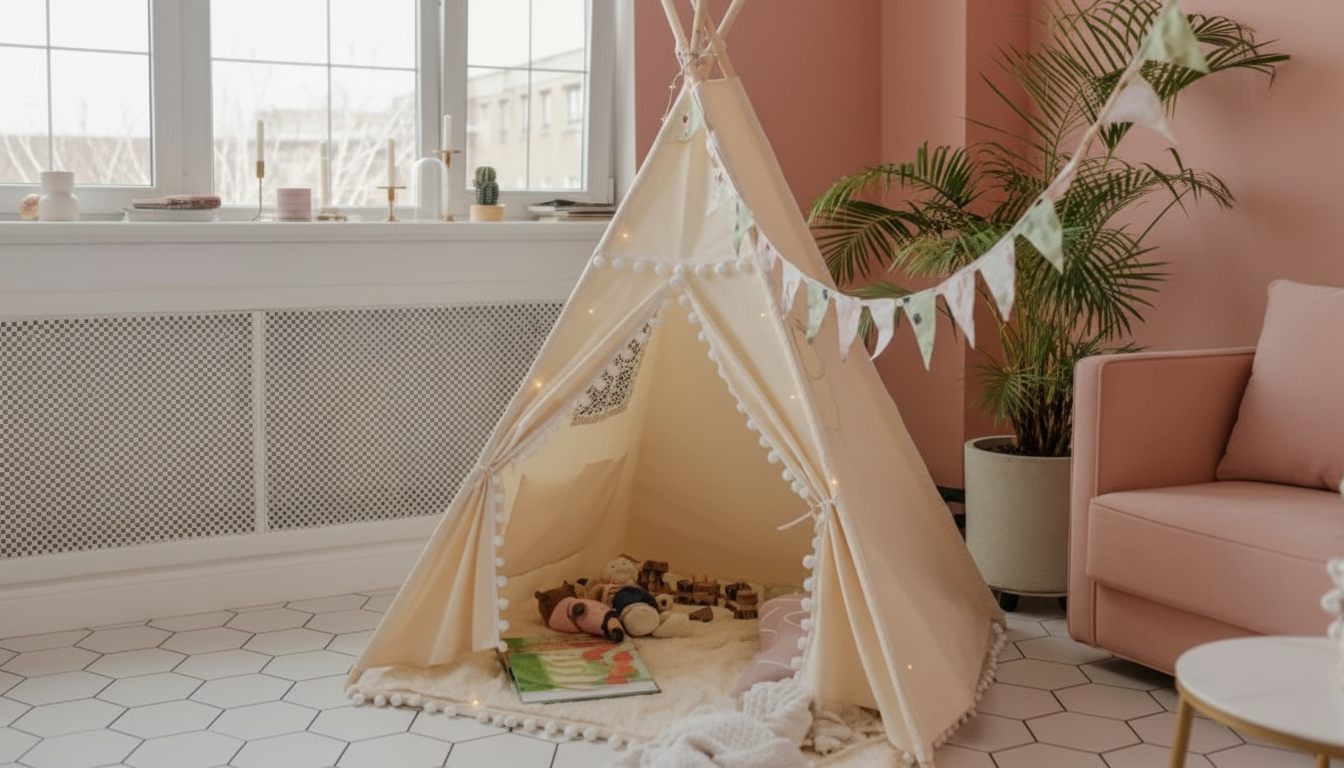
Children’s Play Teepee Tent for Cozy Indoor Adventures
A kids’ teepee creates a simple, calming space for reading, pretend play, and quiet breaks. With the right placement and a few soft accessories, it can become a daily-use nook that fits naturally into playrooms, bedrooms, or family areas. For many families, a teepee also helps “anchor” play in one tidy zone—so blocks, books, and plush toys don’t travel quite as far.
What Makes a Teepee a Favorite Play Space
A teepee tent feels special because it’s both open and enclosed: kids can peek out, invite siblings in, and still feel like they have a little world of their own. That mix supports multiple kinds of play across the day.
- Encourages imaginative play: forts, camping, “store,” puppet shows, and role-play.
- Supports quiet time: reading corner, sensory break, or a calm wind-down before naps or bedtime routines.
- Defines a personal space: especially helpful in shared rooms, where a consistent “my spot” can improve independence and smoother transitions.
- Works in small homes: a contained play zone that can be shifted to another corner when guests come over or when you want to refresh the room layout.
Highlights to Look For in a Children’s Play Teepee Tent
Not all teepees are built the same. A few practical details make a big difference in how often it gets used—and how confidently it holds up to daily play.
- Sturdy poles and a stable base: reduces tipping when kids crawl in and out or lean on the sides during games.
- Breathable fabric panels: improves airflow and comfort, especially during active pretend play.
- Kid-friendly doorway: easy to open/close without pinching fingers or snagging sleeves.
- Simple assembly and pack-down: helpful for quick room resets, shared spaces, or storing between seasons.
- Easy-to-clean materials: because snack spills, marker mishaps, and everyday dust are part of real life.
Product Snapshot: Children’s Play Teepee Tent
The Children’s Play Teepee Tent is designed as a cozy hideaway for play, reading, and quiet downtime. It’s a practical pick for bedrooms, playrooms, classrooms, and daycare corners—anywhere kids benefit from a defined nook that feels inviting and special.
- Cozy, multi-use space: great for pretend play, book time, and calm breaks.
- Fits common family spaces: works as a playroom focal point or a bedroom corner retreat.
- Easy to style: pairs well with floor cushions, a small rug, and a basket of books or plush toys.
- Ready to gift: in stock with available inventory for quick ordering.
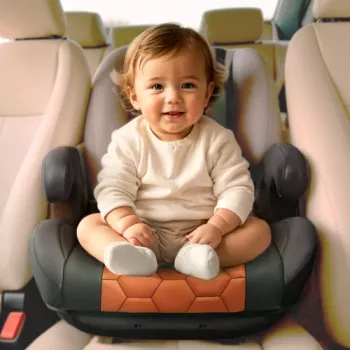
To round out a day-on-the-go setup for parents, consider pairing it with a roomy, hands-free bag like the Vintage Design Fashion Shoulder Messenger Bag for books, small toys, and wipes. And for travel days, the Child Car Booster Seat can help keep routines consistent between home and outings.
Quick comparison: teepee vs other indoor play spaces
| Option | Best for | Pros | Considerations |
|---|---|---|---|
| Teepee tent | Cozy nook + pretend play | Defined personal space; easy to style; encourages calm play | Needs a small footprint; check stability on slippery floors |
| Pop-up play tent | Fast setup and travel | Very lightweight; often folds flat | Can feel flimsy; fabric may trap heat if not ventilated |
| Blanket fort | Occasional creative play | No purchase needed; flexible shapes | Unstable; can collapse; requires furniture and supervision |
| Cardboard playhouse | Craft and decorating | Kids can color and customize | Less durable; can crease/tear; not ideal for repeated moving |
Where to Set It Up for Everyday Use
Placement can determine whether a teepee becomes a daily favorite or something that gets bumped, ignored, and eventually folded away. Choose a spot that’s comfortable for kids and convenient for adults to supervise.
- Pick a low-traffic corner: reduces collisions during energetic play and makes it easier to keep the area tidy.
- Use a soft base: place it on a rug or foam mat to boost comfort and reduce slipping.
- Keep distance from heat sources: leave clearance from heaters, fireplaces, and floor vents.
- Add simple nearby storage: a small bin for books and a basket for plush toys keeps the space welcoming and easy to reset.
Safety and Supervision Basics
A teepee is a cozy play space, but it’s still an indoor product that should be set up thoughtfully. Following basic toy and product safety guidance helps reduce common risks.
- Assemble carefully: follow included instructions and do stability checks before play.
- Skip cords and long strings: avoid hanging accessories that could create entanglement hazards.
- Remove small decor for toddlers: keep tiny items out of reach for kids who might mouth or swallow them.
- Inspect regularly: check for loose parts, splintering poles, torn seams, or fabric wear.
- Choose age-appropriate lighting: battery LED only, and keep the interior uncluttered to prevent trips.
For broader toy safety guidance, review resources from the U.S. Consumer Product Safety Commission (CPSC) and the American Academy of Pediatrics via HealthyChildren.org.
Comfort Upgrades Kids Actually Use
Care, Cleaning, and Storage Tips
FAQ
What age is a play teepee suitable for?
Most play teepees work well for toddlers through early elementary ages, especially for reading, pretend play, and calm breaks. Younger children should always be supervised, and it’s best to confirm the recommended age range from the manufacturer and consider your room layout for safe placement.
How much space is needed for a teepee tent indoors?
Plan for the teepee’s footprint plus a little buffer space so kids can enter and exit without bumping furniture. Setting it on a rug or foam mat helps with comfort and stability, and it should be positioned with clear distance from heaters, fireplaces, and vents.
How can a teepee be made more comfortable for reading and quiet time?
Add a cushion or soft mat, keep a small basket of books nearby, and use gentle battery-powered LED lighting if needed. An uncluttered interior makes it easier for kids to settle in and actually use the space for calm reading breaks.






Leave a comment