Indoor Cat Enrichment: DIY Toys, Play Routines & Home Tips
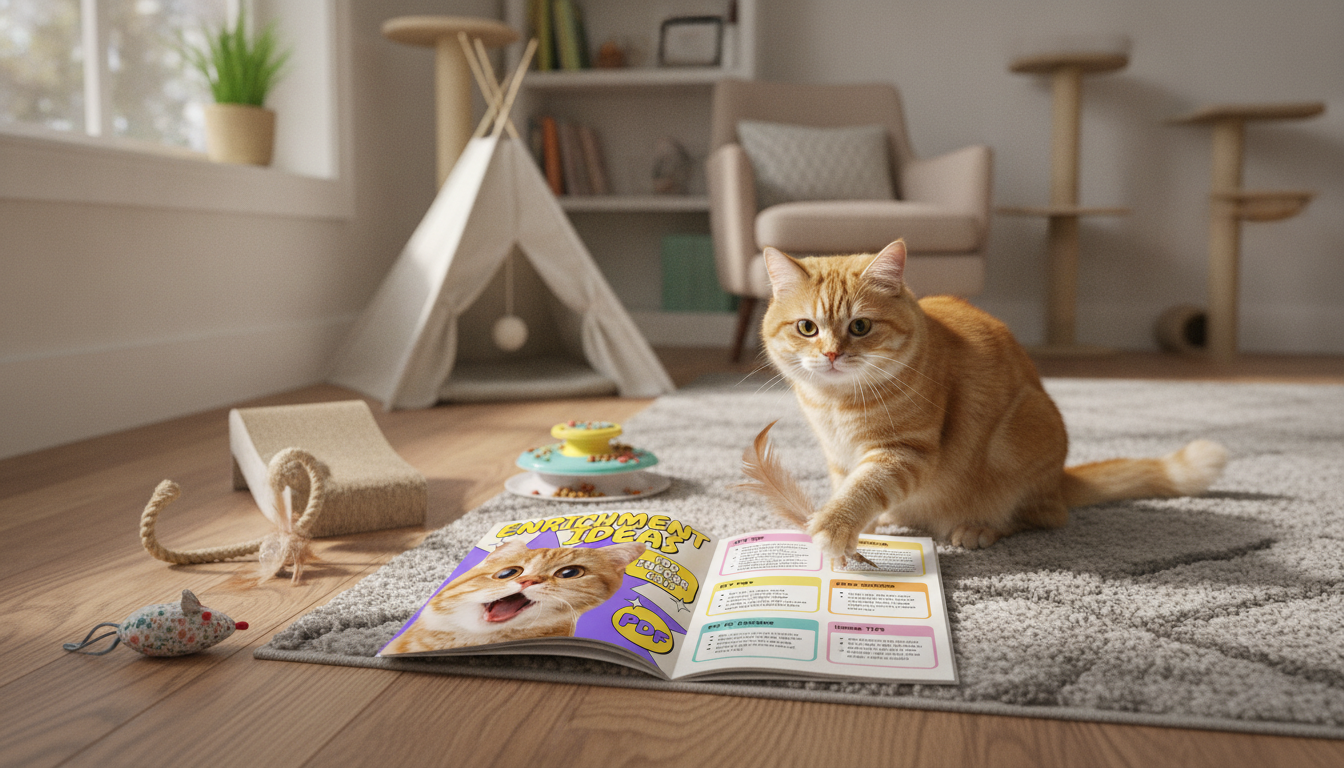
Indoor Cat Enrichment Made Simple: DIY Toys, Play Routines, and a Cat-Friendly Home
Indoor cats thrive when their day includes chances to hunt, climb, explore, and rest in ways that match natural feline instincts. A few small changes—rotating toys, adding vertical space, and setting predictable playtimes—can reduce boredom behaviors and support healthy weight, mood, and sleep. This guide shares practical enrichment ideas that fit real homes and busy schedules, plus a printable plan for easy follow-through.
What Indoor Cats Need for a Balanced Day
A well-rounded indoor routine doesn’t need to be complicated. It simply needs to meet a few core needs—most of which can be supported with short, consistent moments throughout the day.
- Hunt: short bursts of stalking, chasing, and pouncing through interactive play
- Climb and perch: vertical territory to watch, nap, and feel secure
- Scratch: stable scratch zones in key rooms to mark, stretch, and maintain claws
- Forage: food puzzles and scavenger-style feeding to slow eating and engage the brain
- Hide and rest: cozy retreats that allow undisturbed sleep and decompression
For deeper guidance on aligning the home environment with feline behavior needs, the American Association of Feline Practitioners (AAFP) Feline Behavior Guidelines and International Cat Care advice resources are helpful references.
Quick Home Tweaks That Create Instant Enrichment
- Add vertical routes: a cat tree near a window, a sturdy shelf step, or a cleared bookcase level
- Build “safe zones”: at least one quiet bed or covered hideaway per cat, away from foot traffic
- Make windows interesting: a perch plus a rotating view (bird feeder outside if safe/allowed)
- Place scratching stations where cats already linger: near sleeping spots and common pathways
- Create exploration micro-zones: a paper bag (handles removed), a cardboard box, or a blanket fort rotated weekly
Room-by-room enrichment checklist
| Area | Add this | Why it helps |
|---|---|---|
| Living room | Tall perch + scratching post | Vertical confidence and a daily stretch routine |
| Bedroom | Covered bed or crate-style hide | Secure rest and fewer nighttime disturbances |
| Kitchen | Treat scatter mat or puzzle feeder | Foraging and slower eating |
| Hallway | Runner rug + wand-toy runway | Safe sprinting and controlled high-energy bursts |
| Window spot | Perch + rotating toy nearby | Visual stimulation and low-effort engagement |
DIY Toys That Actually Get Used
The best DIY cat toys are simple, safe, and easy to refresh. To keep interest high, make two or three versions and rotate them—your cat will often treat a “rediscovered” toy like a brand-new one.
- Sock “kicker”: fill an old sock with crinkly paper and a pinch of catnip (for cats that respond), tie off securely
- Cardboard “hunt box”: cut a few paw-sized holes in a box; drop in soft balls or treats for batting
- Paper-tube treat roller: fold ends of a toilet paper roll, poke a few holes, add a few kibbles
- Ribbon-free teaser: use a fabric strip or shoelace-length fleece (supervised only) tied to a stick
- Ice puck treats: freeze tuna water or low-sodium broth in a shallow mold for a lick-and-explore activity
Safety note: avoid leaving stringy items unattended, skip anything with small detachable parts, and don’t use adhesives or materials with strong chemical odors.
Play Routines: A Simple Weekly Rotation That Prevents Boredom
Enrichment works best when it’s predictable for the human and satisfying for the cat. Short sessions also help prevent overstimulation (especially in younger cats).
- Aim for 2 short interactive sessions daily: 5–10 minutes each is often more effective than one long session
- Use the “hunt sequence”: stalk → chase → pounce → catch → eat (end with a small treat or meal portion)
- Rotate toys: keep 2–3 out, store the rest, and swap every 3–4 days for novelty
- Match the toy to the cat: ground skitters for stalkers, aerial toys for jumpers, kicker toys for wrestlers
- Set predictable cues: same time window and same “all done” signal to reduce pestering between sessions
If scheduling is the hard part, a printed tracker can turn enrichment into a quick habit instead of a daily decision. The Printable Cat Enrichment Guide with DIY toys and play routines is designed to keep toy rotation, play cues, and home setup notes in one place.
Brain Games and Food Enrichment (Without Overfeeding)
Cat-Friendly Home Tips for Multi-Cat or Small-Space Living
When you’re juggling supplies between rooms (wand toys, treats, clicker, small puzzle pieces), having a dedicated carry-all can make it easier to stay consistent. Options like the Dog Walking Waist Bag for Treats & Poop Bags can also work as a hands-free training and treat pouch at home, while a larger organizer like the Vintage Design Fashion Shoulder Messenger Bag can store enrichment items so they’re not scattered around the house.
Printable Plan for Consistency (Easy to Stick With)
Printable Cat Enrichment Guide: What’s Included
FAQ
How much play does an indoor cat need each day?
Many indoor cats do well with two interactive play sessions per day, about 5–10 minutes each. Adjust based on age, health, and energy level, and end with a small treat or meal portion to complete the hunt cycle and encourage calm.
What are safe DIY toy materials for cats?
Generally safer options include cardboard, plain paper, fleece strips (supervised), and sturdy pet-safe balls. Avoid leaving strings, ribbons, small parts, or easily shredded materials unattended, and skip glues or items with strong chemical smells.
How can enrichment help with nighttime zoomies?
Evening interactive play followed by a small post-play meal often reduces late-night energy spikes. A consistent bedtime routine plus daytime foraging and climbing options can also prevent energy from building up all day.












Leave a comment