Cozy Cat House with Rotating Turntable Toy for Play
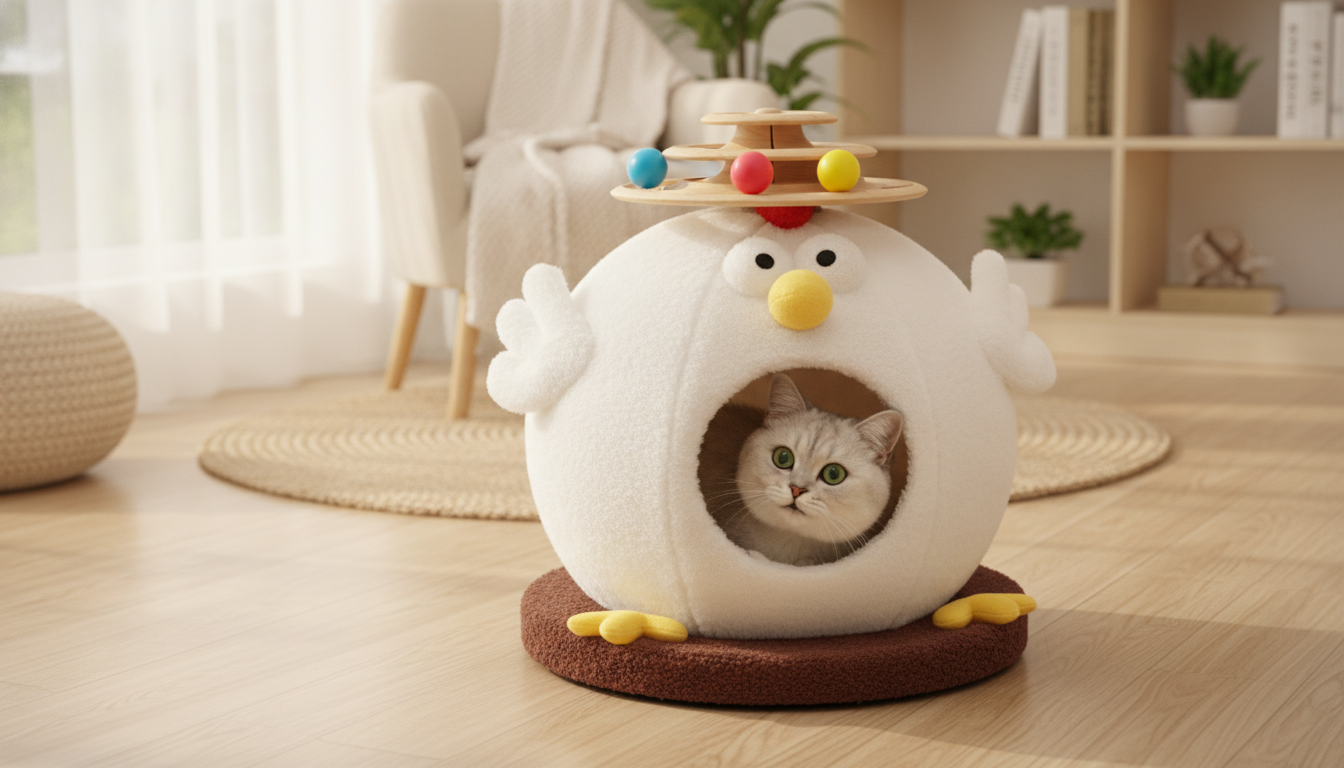
Cute Cat House with Rotating Turntable Toy
A cozy hideaway that also keeps curious paws busy can make daily life calmer for both cats and households. This cat house pairs a snug den-like space with a rotating turntable toy to encourage play, reduce boredom, and create a reliable “safe spot” for naps, breaks, and observation.
What this cat house adds to a home
Cats thrive when their environment supports both rest and “hunt-style” activity. A combined rest-and-play setup helps meet two everyday needs in one familiar spot—especially useful when space is limited or when toys tend to migrate under furniture.
- Combines two core cat needs in one spot: a sheltered resting space and an interactive play element
- Helps create a predictable routine location for downtime and solo play
- Useful for indoor cats that benefit from additional enrichment and variety
- Can support multi-cat homes by offering a dedicated personal space for one cat at a time
For deeper guidance on setting up supportive spaces (resting zones, play opportunities, and safe observation areas), refer to the American Association of Feline Practitioners (AAFP) Feline Environmental Needs Guidelines.
Rotating turntable toy: how it supports healthy play
Many cats prefer short, frequent play bursts over long sessions. A rotating toy can tap into that natural rhythm and provide a satisfying outlet between mealtimes, meetings, and busy household moments.
- Encourages short bursts of batting and pouncing, which aligns with natural hunting-style play
- Can help redirect attention from less desirable targets (cords, table edges, plants) by offering an engaging alternative
- Supports independent play when human-led play sessions aren’t possible
- Best results come from rotating activities: pair with wand play, treat puzzles, and window time to keep interest high
If interest dips, try “novelty scheduling”: put the house in its usual place, but only activate the rotating play element for a few minutes at a time. This keeps the toy from blending into the background and preserves the fun of the chase. For more enrichment ideas, see International Cat Care’s environmental enrichment guidance.
Comfort and security features to look for
A cat house earns regular use when it feels safe, stable, and easy to settle into. The play feature matters most once the base “den” is genuinely comforting.
- Den-like enclosure that feels sheltered without trapping heat or limiting airflow
- Stable base so the house doesn’t shift when a cat enters quickly or plays with the turntable
- Smooth edges and sturdy surfaces to reduce snagging or splinters
- Enough interior room for a cat to turn around and settle; consider posture changes (curling vs. stretching)
- A removable or wipeable surface helps keep the resting area fresh
For cats that startle easily, stability is a deal-breaker: if the house wobbles, a cautious cat may avoid it entirely. On slick floors, placing it on a non-slip mat can improve confidence and encourage repeat visits.
Placement tips for better use
Placement shapes how a cat feels about the space. Many cats want privacy and visibility at the same time—covered enough to relax, open enough to keep tabs on the room.
- Choose a low-traffic corner where a cat can relax while still watching the room
- Avoid placing directly next to loud appliances or doors that slam
- Keep it away from litter boxes to maintain a cleaner resting area
- If the cat is timid, place near familiar items (a favorite blanket or a worn T-shirt with a familiar scent) during the first week
- For confident cats, place near a window or cat tree to create a mini “activity zone”
In multi-cat homes, consider setting the house slightly off the main pathway to prevent “ambush traffic.” A calmer approach lane helps the occupant feel secure and reduces the chance of one cat guarding the entrance.
Cleaning and upkeep
A little upkeep keeps the resting area inviting and helps the toy spin smoothly. Strong fragrances can be off-putting, so mild cleaning goes a long way.
Quick feature checklist
| Feature | Why it matters | What to check at home |
|---|---|---|
| Enclosed resting space | Supports security and stress reduction | Quiet spot available; cat enjoys covered beds |
| Rotating play element | Encourages independent activity | Cat likes batting/spinning toys |
| Stable footprint | Prevents tipping during play | Non-slip surface or stable floor area |
| Easy to clean | Maintains hygiene and reduces odors | Access for wiping; low-fuss upkeep routine |
| Appropriate size | Comfort for turning and settling | Measure cat length and typical sleeping posture |
Who it tends to suit best
Product options
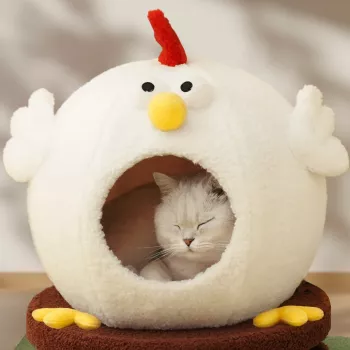
- Cute Cat House with Rotating Turntable Toy: a combined rest-and-play setup designed to offer a cozy enclosure plus an engaging rotating toy feature.
- Dog Walking Waist Bag for Treats & Poop Bags: a practical organizer for multi-pet households—handy when you’re juggling treats, keys, and cleanup supplies on outings.
FAQ
Will a shy cat actually use a covered cat house?
Yes, many shy cats prefer covered spaces, but introductions work best when gradual. Place the house in a quiet corner, add a familiar scent (blanket or worn T-shirt), and use treats or a small pinch of catnip near the entrance—without forcing entry. Give it 1–2 weeks for the cat to accept it as a safe spot.
Is the rotating toy safe for everyday use?
It can be, especially when you supervise the first few sessions to confirm your cat’s play style and that the base stays stable. Check for loose parts regularly, keep the turntable area free of trapped fur, and stop using it if anything becomes damaged or sharp.
How often should a cat house be cleaned?
A practical cadence is a quick weekly shake-out or wipe and a deeper clean about once a month or as needed. Clean more often during heavy shedding, if you have multiple cats, or if anyone in the home is sensitive to allergens or odors.







Leave a comment