4-Week Puppy Training Plan: Potty, Cues & Socialization
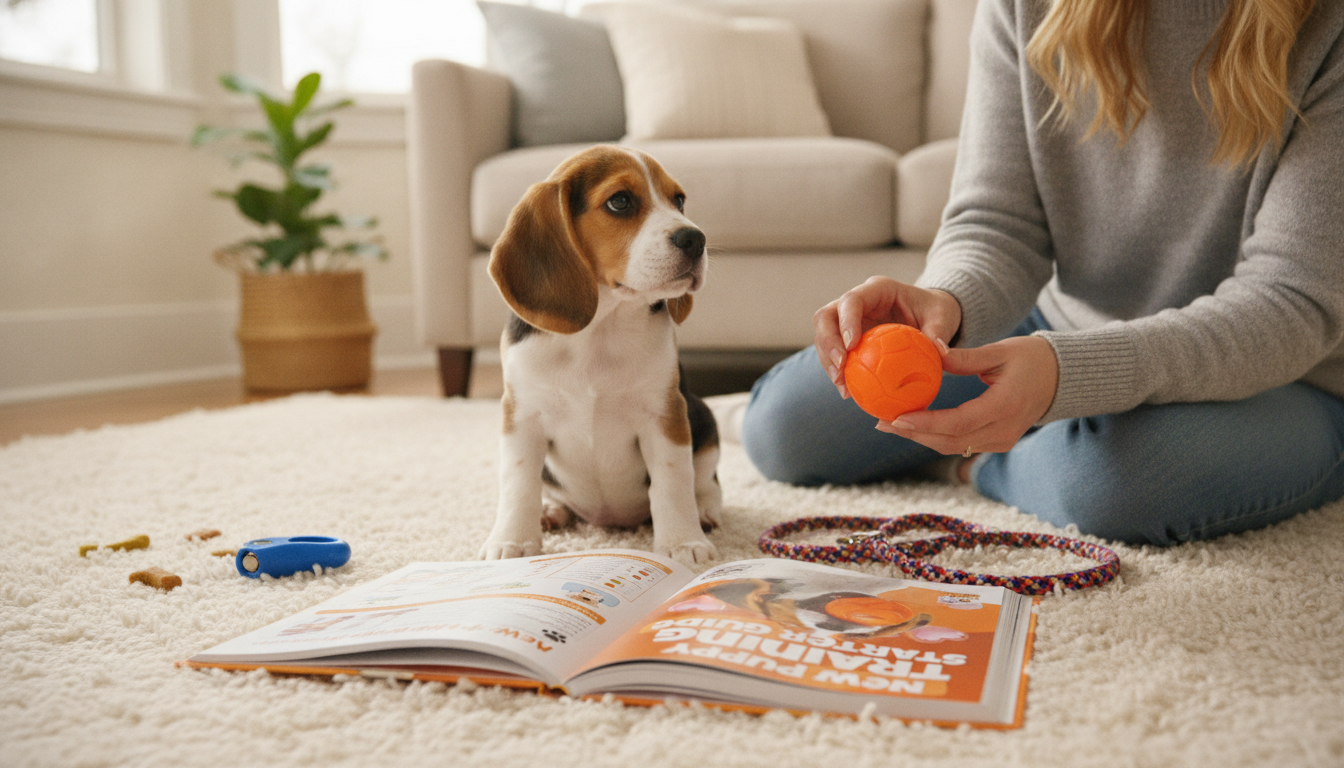
New Puppy Training Starter Guide: A 4-Week Routine for House Training, Basic Cues, and Confident Socialization
Bringing home a puppy is exciting and chaotic at the same time. Early training is less about perfection and more about building predictable routines, clear communication, and positive experiences that shape lifelong behavior. This starter guide lays out a simple 4-week plan for beginners, with practical house-training steps, foundational cues, bite inhibition basics, and safe socialization milestones. Use it as a daily checklist: short sessions, lots of reinforcement, and management that prevents mistakes from becoming habits.
What to Set Up Before Training Starts
Before you teach “Sit,” set your puppy up to succeed in real life. The goal is fewer opportunities to practice unwanted behaviors and more chances to earn rewards for the right choices.
- Pick 3–5 household rules that stay consistent (sleeping spot, potty spot, off-limits rooms, furniture rules). Mixed messages slow learning.
- Create a safe space with a crate or exercise pen, a washable bed, multiple chew options, and water. This is your management tool for downtime and preventing mischief.
- Choose rewards (tiny soft treats, part of a meal’s kibble, a tug toy, or praise). Use higher-value treats when distractions increase.
- Plan around puppy biology: many puppies need potty breaks after waking, eating/drinking, playing, and every 30–90 minutes depending on age and size.
- Decide cue words early (one word per behavior): “Sit,” “Down,” “Come,” “Touch,” “Leave it,” “Drop,” “Place,” plus a “Yes” marker or clicker.
House-Training: The Fastest Way to Fewer Accidents
House-training improves fastest when prevention is the priority. Every indoor accident is practice you don’t want your puppy repeating—so manage freedom carefully while bladder control develops.
- Management first: when you can’t directly supervise, use a crate/pen. Freedom is earned gradually.
- Potty routine: go to the same outdoor spot on leash, stand still, and wait. The moment your puppy finishes, mark (“Yes”) and reward immediately.
- Simple schedule: on waking, after meals, after play, after training, and before bed. Add extra breaks during growth spurts or new environments.
- Accidents: interrupt with a neutral sound, take your puppy outside, then clean indoor spots with an enzymatic cleaner. Punishment can create anxiety and “sneaky” potty habits.
- Nighttime: many puppies need at least one overnight break at first. Keep it boring—low light, no play, straight back to bed.
| Time/Trigger | What to Do | Goal |
|---|---|---|
| Wake up (morning or naps) | Straight outside on leash, reward after elimination | Build a reliable first-step habit |
| After meals (5–20 min) | Outside, then short calm walk | Prevent post-meal accidents |
| After play/training | Outside, then water break | Link excitement with potty opportunity |
| Every 30–90 minutes (varies) | Outside or supervised indoor play | Reduce mistakes while bladder control develops |
| Before bed | Outside, quiet praise, crate/pen | Settle for the night |
A Simple 4-Week Puppy Routine (Beginner-Friendly)
Think “short and frequent,” not long sessions. A minute of focused practice sprinkled through the day beats a single 20-minute lesson that leaves your puppy overstimulated.
Week 1 — Settle in and build trust
- Work on name recognition, “Touch” (hand target), gentle handling, and calm crate introduction.
- Keep sessions to 1–3 minutes and end while your puppy still wants more.
- House-training target: 90% prevention through supervision. Track potty times to spot patterns.
Week 2 — Foundational cues and manners
- Add “Sit,” “Down,” and a short “Come” indoors.
- Reinforce calm behavior (lying down, chewing) as much as active training.
- Begin “Leave it” with low-value items and start trade games for “Drop.”
Week 3 — Real-life practice
- Move cues to the yard or a quiet sidewalk. Increase difficulty with mild distractions, not longer duration.
- Leash basics: reward being near your side and keep walks short and upbeat.
Week 4 — Confidence and consistency
Core Skills: The 6 Cues That Make Daily Life Easier
Socialization Without Overwhelm: A Confidence Plan
Socialization means positive exposure, not forced interaction. The aim is calm neutrality and confidence around people, dogs, sounds, and surfaces. For widely referenced guidance on early social experiences, see the American Veterinary Society of Animal Behavior (AVSAB) puppy socialization position statement.
For additional training fundamentals and puppy timelines, you can also review the American Kennel Club’s puppy training basics and AAHA’s pet owner resources.
Common Setbacks and Quick Fixes
Printable Support: Keep the Plan Visible and Easy to Follow
- Use checkboxes for daily goals (potty successes, short training sessions, calm settling, and one positive new exposure).
- Track patterns (accidents, nipping triggers, and which rewards work best) so troubleshooting is faster.
- For a ready-made, beginner-friendly plan with a 4-week routine, house-training steps, basic cues, and socialization prompts, use the New Puppy Training Starter Guide printable eBook.
To make rewards quick and consistent on walks and training outings, keep treats and cleanup essentials in a dedicated pouch like the Dog Walking Waist Bag for Treats & Poop Bags.
FAQ
How long does house-training usually take?
Many puppies show steady improvement in a few weeks, but reliable house-training often takes a few months depending on age, supervision, and how consistently outdoor potty is rewarded. Expect occasional regressions; accidents are useful information that the schedule or supervision needs tightening.
When can a puppy start socialization if vaccinations aren’t complete?
Follow your veterinarian’s guidance, and focus on lower-risk exposure: carry your puppy in public, observe from a comfortable distance, and arrange calm visits with known healthy, vaccinated dogs. The goal is positive experiences without overwhelming or risky contact.
What are the best first commands to teach a new puppy?
Start with attention and safety basics: name recognition, “Touch,” “Sit,” “Down,” “Come,” and “Leave it/Drop,” then add a settle cue like “Place.” Keep sessions short, use high-value rewards, and practice first in low-distraction areas.









Leave a comment