Anxiety Relief Bundle: 4 Tools for Calm Daily Routines
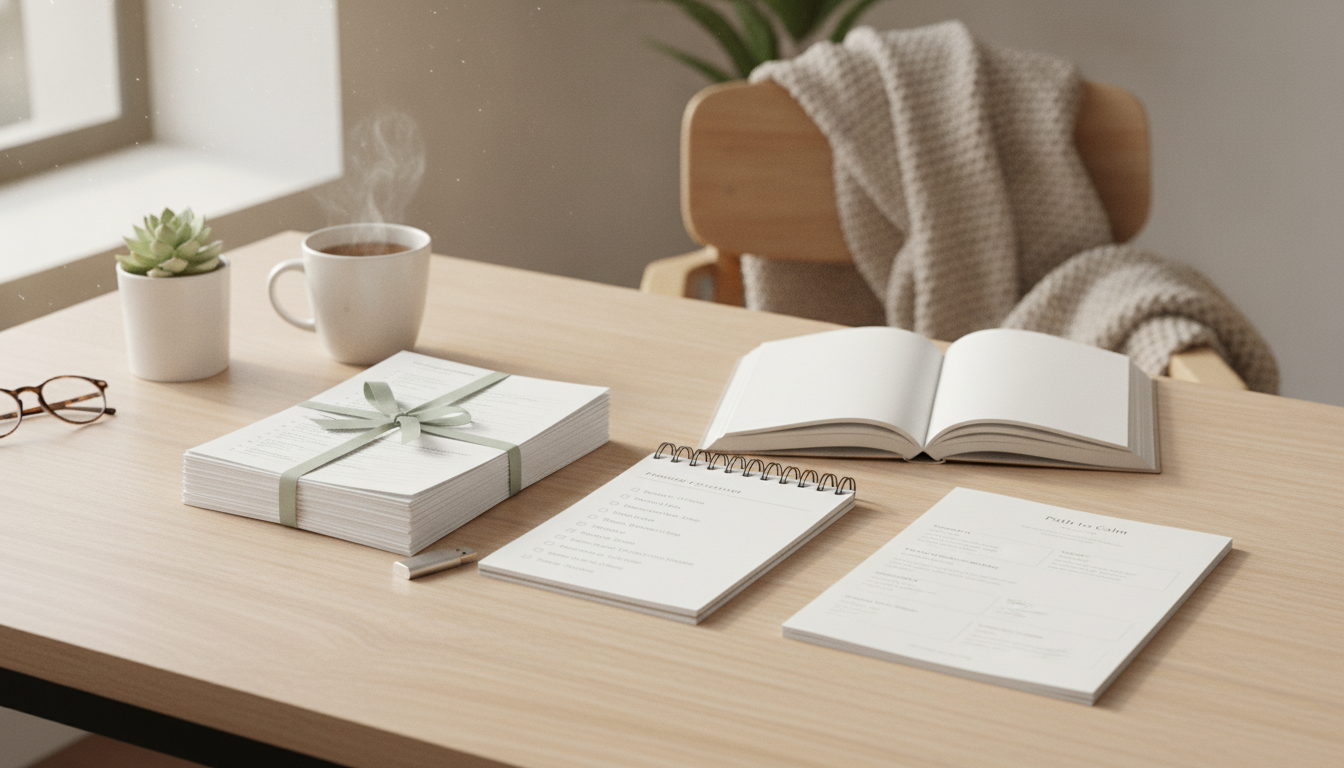
The Anxiety Relief Bundle: A Path to Calm — A 4-in-1 Toolkit for Everyday Steadiness
Anxiety can show up as racing thoughts, muscle tension, restless energy, and a constant feeling of being “on.” When that happens, it’s hard to remember what helps—especially if the goal is to respond calmly instead of reacting automatically. The Anxiety Relief Bundle: A Path to Calm brings four practical resources together—mindfulness exercises, positive thinking prompts, a printable checklist, and a course outline—so calming skills can move from “good idea” to a consistent routine. The sections below explain what’s included, how each piece supports steadier days, and simple ways to fit the materials into real schedules.
What’s Included in the 4-in-1 Bundle
This bundle is built for repeat use: short practices for the moment anxiety spikes, plus a written system you can follow when your brain feels scattered. It’s best suited for anyone who prefers a clear, structured plan rather than relying on memory during stress.
Bundle Components at a Glance
| Component | Primary Goal | When It Helps Most | How to Use It |
|---|---|---|---|
| Mindfulness exercises | Reduce reactivity and increase present-moment grounding | Racing thoughts, agitation, overwhelm | Short daily practice + quick grounding during spikes |
| Positive thinking prompts | Shift from catastrophic to balanced thinking | Self-criticism, worry loops, “what if” scenarios | Use as journaling prompts or quick reframes |
| Printable checklist | Create a calming plan and track results | When anxiety makes decision-making harder | Keep visible; check off steps in order |
| Course outline | Turn tools into a step-by-step skill set | When starting fresh or rebuilding consistency | Follow weekly modules; revisit sections as needed |
How Mindfulness Exercises Support Calm
Mindfulness isn’t about “clearing your mind.” It’s the skill of noticing what’s happening—thoughts, emotions, and body sensations—without getting yanked into alarm mode. Put simply: attention is observation; alarm is the internal emergency siren. Mindfulness builds the space to respond instead of spiraling.
Common styles that work well during anxious moments include breath anchoring (tracking inhale/exhale), body scans (noticing tension areas), labeling thoughts (“planning,” “worrying,” “judging”), and the 5-4-3-2-1 sensory grounding method. Practical cues can make these easier to apply quickly: soften your shoulders, lengthen the exhale, and name sensations directly (“tight chest,” “warm face,” “fluttery stomach”).
Progress usually looks like quicker recovery and fewer all-day spirals—not never feeling anxious. For an overview of how mindfulness is used in mental health and well-being, see the American Psychological Association’s mindfulness resource.
Safety note: If mindfulness makes distress worse (for example, if closing your eyes or focusing inward triggers trauma responses), switch to external grounding (eyes open, naming objects in the room) and consider professional support.
Positive Thinking Without Forcing Positivity
Balanced thinking isn’t denial. It acknowledges discomfort while reducing catastrophic predictions that inflame anxiety. Instead of “Everything is fine,” it aims for “This is hard, and I can take the next helpful step.”
The positive thinking prompts in the bundle help catch common cognitive traps such as all-or-nothing thinking, mind-reading, fortune-telling, and overgeneralizing. A simple reframe structure keeps the process concrete:
- Situation: What happened (facts only)?
- Automatic thought: What did your mind predict or assume?
- Evidence for/against: What supports it, and what challenges it?
- Balanced thought: A more accurate, workable statement.
Self-talk tends to land better when it’s compassionate, specific, and action-oriented: “I’m anxious because this matters. I’ll take two minutes to breathe, then start with the first small task.” Repeating one reframe daily builds a habit that’s easier to access under stress. For background on anxiety disorders and symptoms, the National Institute of Mental Health is a helpful starting point.
Using the Printable Checklist as a Calm-Down Plan
When anxiety is high, decision fatigue is real. A checklist turns coping into a script you can follow without debating every step. A simple “when anxiety hits” flow might look like: notice the spike → slow breathing → orient to your environment → choose the next step.
The most useful calm-down plans include both body-based and thought-based steps. Body-based options can be as basic as hydration, a short walk, stretching, or loosening your jaw and hands. Thought-based options can include a reframe prompt, a brief journal entry, or writing a single “next right step.”
Course Outline: Turning Tools Into a Routine
A Simple 10-Minute Daily Plan Using the Bundle
Who It’s For, Who Should Add Extra Support
Bundle Details and Where to Get It
If you want immediate structure, start with the checklist first, then build skill depth through the mindfulness exercises and the course outline. For those who like to keep coping tools physically organized, a simple everyday carry option like the Vintage Design Fashion Shoulder Messenger Bag can make it easier to keep printed pages, a notebook, and a pen in one place—especially when you’re switching between home, work, and errands.
FAQ
How quickly can results be noticed?
Some people feel more grounded after a single exercise, especially with breath or sensory grounding. Steadier changes typically show up with daily practice over a few weeks, and the checklist’s before/after ratings can make progress easier to see.
Can the bundle be used alongside therapy or medication?
Yes. It can work as a skills toolkit alongside professional care, and sharing your checklist notes with a therapist can make sessions more targeted. Any medication changes should be handled with a prescribing clinician.
What if mindfulness makes anxiety feel worse?
Switch to external grounding (like 5-4-3-2-1), keep your eyes open, and shorten the session. If distress persists—especially with a trauma history—seek guidance from a qualified professional.







Leave a comment