Deep Conversation Starters for Dates, Friends, Networking
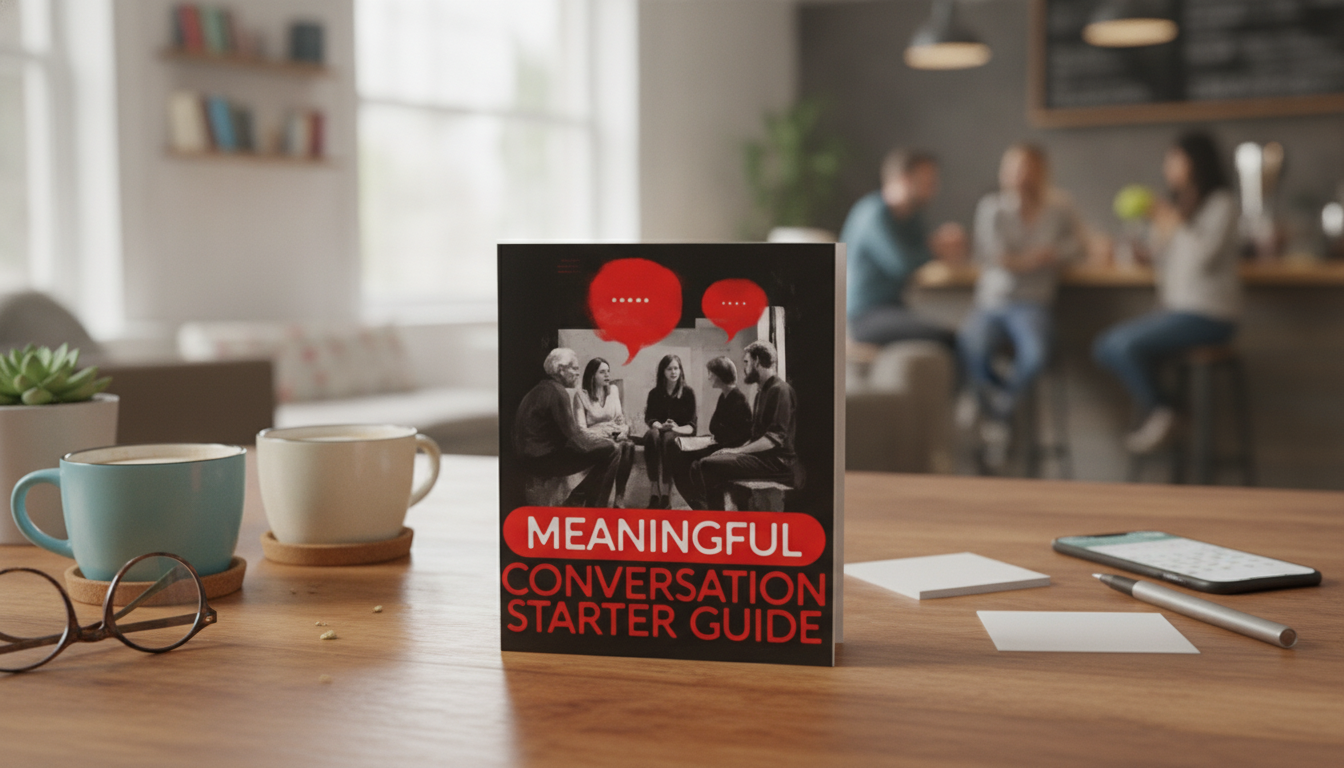
Meaningful Conversation Starter Guide: Deep Questions for Dating, Friendship, and Networking
Small talk can be useful, but it often stalls before people feel truly seen. A structured set of questions and follow-ups makes it easier to move from polite exchanges to real connection—without forcing intimacy or oversharing. This guide is designed to help conversations flow naturally in three common settings: dates, new friendships, and professional networking, with prompts that invite stories, values, and shared interests.
What makes a conversation feel meaningful
Meaningful conversation usually isn’t about landing the “perfect” question—it comes from curiosity, psychological safety, and balanced sharing. When someone senses they won’t be judged or rushed, they’re more likely to offer real examples instead of rehearsed answers.
Open-ended questions work best when they invite specifics (“Tell me about a time…”), not just opinions. Depth also has a rhythm: mixing lighter topics with deeper ones lets the other person choose their comfort level. Signs you’re on the right track include longer answers, storytelling, reflective pauses, and follow-up questions coming back your way.
Just as important: respect boundaries. If someone starts shortening answers, dodging, or changing the subject, take the hint and pivot to a lighter thread.
Quick ways to deepen a conversation without getting intense
| If they say… | Try asking… | Why it works |
|---|---|---|
| “Work’s been busy.” | “What part has been the most satisfying lately?” | Moves from status to meaning and motivation |
| “I like traveling.” | “What’s a place that changed how you see things?” | Invites a story and personal insight |
| “I’m into fitness.” | “What keeps you consistent when motivation dips?” | Explores habits and values without judgment |
| “I grew up near here.” | “What’s a small tradition from home you still keep?” | Connects to identity in a gentle way |
| “I’m not sure.” | “Want two options to choose from?” | Reduces pressure and keeps momentum |
How to use the printable guide in real life
Think of a question list as a menu, not a script. Pick the setting (date, friend hangout, networking) and choose 5–8 questions you genuinely like—then let the answers breathe.
- Start with one warm-up question, then one values-based question, then one future-focused question.
- Use simple follow-ups to go deeper naturally: “What led to that?”, “How did that feel?”, “What did you learn?”
- Mirror the level of detail you receive; match energy rather than forcing depth.
- Use a “save point” line to shift smoothly: “That’s interesting—can I ask something related?”
- End well: close with appreciation and a next step (trade numbers, plan a meet-up, connect on LinkedIn).
If you want something you can keep on your phone or print for a quick pre-event refresher, try the Meaningful Conversation Starter Guide (printable). For in-person meetups, carrying a slim notebook or essentials in a structured bag can also make you feel more “ready” walking into a coffee date or mixer—like the Vintage Design Fashion Shoulder Messenger Bag.
Conversation starters for dating: connection without interrogation
Early dates go best when the tone feels like shared discovery, not a checklist. Start with questions that invite recent stories, then gradually move toward values.
- First-date friendly openers: “What’s been the highlight of your week?” and “What are you looking forward to next month?”
- Values and compatibility: “What does a good relationship look like to you?” and “What helps you feel cared for?”
- Story-driven prompts: “What’s a moment you felt proud of yourself?” and “Who has influenced you the most?”
- Playful depth: “If your life had a theme song this year, what would it be?”
- Gentle boundary checks: “Is it okay if I ask a slightly deeper question?”
- If a topic gets heavy, pivot kindly: “Thanks for sharing—want to switch to something lighter for a bit?”
Conversation starters for friendship: building closeness over time
Friendship deepens through repeated “small honesty” moments: a preference, a goal, a funny story, a little vulnerability—then consistency.
- Find common ground: “What’s something you never get tired of talking about?”
- Reveal small truths first: “What’s a habit you’re trying to build?” before “What are you working through lately?”
- Shared experiences: “What’s a perfect low-key weekend for you?”
- Supportive questions: “What kind of encouragement actually helps you?”
- Friendship rituals: suggest a recurring plan (walks, coffee, hobby night) to turn a good talk into consistency.
- Repair and honesty: “How do you prefer to handle misunderstandings?” keeps future conflict smaller.
Conversation starters for networking: memorable, not transactional
Networking stands out when it’s human and specific. Skip the résumé recap and aim for work-meaning questions that invite a short story.
Deep questions that stay considerate
Common conversation traps and how to recover
Printable guide highlights and best moments to use it
For a quick refresher you can print or save, the Meaningful Conversation Starter Guide (printable) keeps the questions organized by setting so you can choose what fits the moment.
For more on listening and connection, see the CDC’s overview of active listening, the APA’s research on social connection and health, and HBR’s perspective on the power of vulnerability.
FAQ
How many questions should be asked in one conversation?
Aim for 5–8 questions as flexible options, not a rapid sequence. Let one good answer open into follow-ups, and only switch topics when the thread feels complete.
What if the other person gives short answers?
Lower the intensity and try either/or choices, then share a small detail about yourself to model openness. If they still stay brief, shift to a lighter topic or an activity-based question.
Are deep questions appropriate for networking events?
Yes—when the “deep” angle stays work-relevant (meaning, learning, problem-solving) and fits the setting. Avoid overly personal topics, and ask permission if you want to go more reflective.











Leave a comment