Easy Homework Help for Parents: Calm Routines & Printables
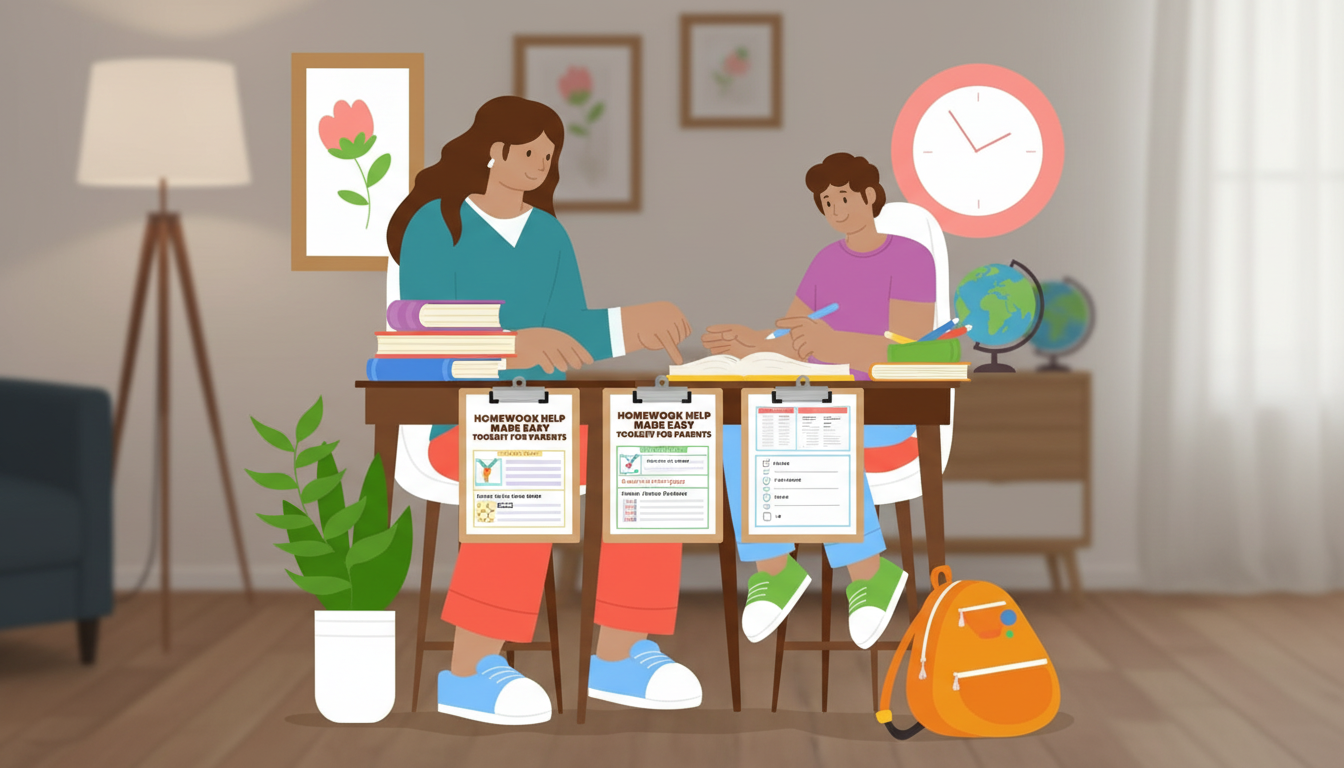
Homework Help Made Easy: A Calm, Repeatable System for Parents
Homework time can feel like a daily negotiation—especially when kids are tired, distracted, or unsure where to start. The most effective “easy homework help” isn’t about longer sessions or stricter rules. It’s about a simple system: clear routines, a calm workspace, and step-by-step strategies that gradually shift responsibility from parent to child. When the process stays predictable, kids spend less energy avoiding and more energy finishing.
Below is a practical setup for building study habits, improving follow-through, and supporting independent learning—plus printable tools that make routines stick.
What “easy homework help” looks like at home
- Consistency over intensity: Short, repeatable routines beat long, stressful sessions.
- A predictable start: The same first two steps each day (snack/water, materials check) reduce avoidance.
- Support without taking over: Parents coach the process; kids do the work.
- Progress includes behaviors: Starting on time, finishing, and checking work matter as much as grades.
If stress is running high, it can also help to normalize coping skills and quick regulation strategies. The American Psychological Association offers practical resources for managing stress that apply to kids and adults alike.
Set up the homework environment in 10 minutes
A good homework setup removes friction. The goal is fewer interruptions (“Where’s my pencil?”), fewer arguments (“I can’t focus!”), and more independent starts.
- Choose one primary spot: Quiet, well-lit, and stocked with basic supplies (pencils, paper, charger, calculator as needed).
- Create a “launch pad”: Near the door or backpack area for folders, signed forms, and devices.
- Reduce scavenger hunts: Keep frequently used items in a small bin or caddy.
- Use a visual cue: Post a simple checklist at the workspace so reminders aren’t stuck in your head.
| Area | What to prepare | Why it helps |
|---|---|---|
| Workspace | Lamp, chair, supplies bin, timer | Fewer interruptions and better focus |
| Materials station | Folder system (To Do/Done), notebook, planner | Kids can find what they need independently |
| Distraction control | Phone outside the area, notifications off, TV off | Less task-switching and faster completion |
| End-of-session routine | Pack backpack, place forms to sign, reset desk | Prevents morning rush and lost assignments |
Build study habits with a simple daily routine
Instead of asking kids to “focus,” give them a routine that tells them what to do next. A short sequence repeated daily becomes automatic—especially when it’s anchored to something that already happens.
- Pick a consistent start time: Attach homework to an existing habit (after snack, after sports, after dinner).
- Use a 3-part flow: Plan (2 minutes), Focus (10–25 minutes), Review (2–5 minutes).
- Build momentum first: Start with the easiest task when resistance is high; switch to hardest when focus is strongest.
- Close with a “done check”: Confirm completion, show work, and pack materials.
For more age-appropriate guidance on routines and study habits, the American Academy of Pediatrics provides practical recommendations families can adapt at home.
Homework strategies that reduce conflict and increase follow-through
Power struggles often come from repeated reminders and unclear expectations. Replace “nagging loops” with a system that does the reminding for you.
- One checklist, one check-in: Use a visual checklist plus a scheduled parent check (for example, 10 minutes after start).
- Use a timer and short breaks: 10–15 minutes for younger kids; 20–30 minutes for older kids.
- Turn big assignments into micro-steps: “Open doc → write title → outline 3 bullets → draft one paragraph.”
- Offer limited choices: “Math first or reading first?” gives control without derailing the plan.
- Praise specific behaviors: Starting on time, asking for help appropriately, checking work before submitting.
Coaching independence: what to say (and what to avoid)
Independent learning grows when kids practice thinking steps—not when adults rescue them. The simplest rule: keep the child in the driver’s seat.
Families looking for additional learning-at-home support can also explore tips from the Harvard Graduate School of Education, especially around building motivation and routines.
Printable tools that make routines stick
Using the Homework Help Made Easy Toolkit with your child
A printable system works best when kids feel like it’s happening with them, not to them. For a ready-to-use set of routine sheets and planning pages, see the Homework Help Made Easy Toolkit for Parents – Printable Guide for Creating Study Habits, Homework Strategies & Independent Learning.
To cut down on “lost papers” and keep supplies in one place, a dedicated carry-all can help—especially for older students juggling multiple classes. The Vintage Design Fashion Shoulder Messenger Bag can be used to organize folders, a planner, and a small supplies pouch for on-the-go study sessions.
Common hurdles and quick fixes
FAQ
How can a parent help with homework without doing it for the child?
Coach the process rather than the answers: clarify directions, help your child plan the next step, and ask guiding questions. Keep your child holding the pencil (or typing) and use brief check-ins plus self-check routines to build ownership.
What’s a good homework routine for kids who get overwhelmed easily?
Use a predictable Plan–Focus–Review sequence and keep the first task easy to build momentum. Break assignments into tiny steps and use a timer with short breaks so sessions stay manageable but consistent.
How long should homework take each night?
It depends on age, workload, and the child’s pace, so track real time for a week to find a realistic baseline. If homework regularly runs long, prioritize the most important tasks and communicate with the teacher about volume or support.









Leave a comment