Empowered Budgeting Toolkit: 4-in-1 Monthly Money System

The Empowered Budgeting Toolkit: A 4-in-1 Bundle for Confident Monthly Money Planning
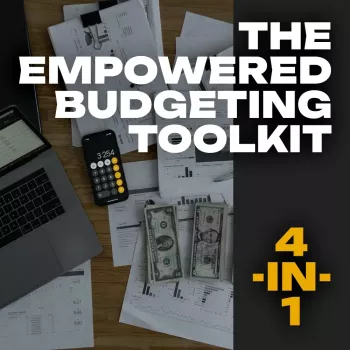
A clear budget is easier to follow when the tools match real life. The Empowered Budgeting Toolkit is a 4-in-1 bundle that pairs a budget planner with an Excel guide, a monthly expense and savings structure, practical wealth-building strategies, and guided affirmations designed to reinforce consistent habits—so planning, tracking, and mindset work together. The goal isn’t perfect spreadsheets; it’s a repeatable monthly system that keeps bills covered, spending intentional, and savings moving forward.
What’s Included in the 4-in-1 Bundle
This toolkit is built to cover the full loop: plan your month, track what happens, make adjustments before things drift, and strengthen the habits that make budgeting feel doable.
- Budget planner framework to map income, bills, variable spending, and goals
- Excel guide to streamline calculations, categories, and ongoing tracking
- Monthly expense and savings structure to reduce guesswork and improve consistency
- Wealth strategies to shift from short-term tracking to long-term planning
- Guided affirmations for wealth to reinforce follow-through and reduce money stress
Bundle Components and What They Help With
| Component | Best for | Outcome to aim for |
|---|---|---|
| Budget planner | Setting monthly spending limits and priorities | A realistic plan that reflects bills and lifestyle |
| Excel guide | Tracking expenses and automating totals | Faster reviews and fewer manual errors |
| Monthly expense & savings system | Creating repeatable routines | More consistent saving with less friction |
| Wealth strategies | Goal planning beyond the current month | Clearer targets for debt payoff, emergency fund, investing |
| Guided affirmations for wealth | Mindset and habit reinforcement | Less avoidance and more consistent check-ins |
Who This Toolkit Fits Best
Some budgeting tools are great for recording history, while others are better for making decisions before the money is gone. This bundle is for people who want both: a plan that’s easy to set up and a tracking flow that’s simple to maintain.
- Anyone rebuilding money habits after inconsistent tracking or overspending
- People who want a structured monthly flow without reinventing categories every month
- Budgeters who prefer spreadsheets but also want a planner-style overview
- Goal-focused savers who want to connect daily decisions to longer-term wealth targets
- Busy households that need a repeatable process for bills, spending, and savings
If paycheck timing is unpredictable, it can also help to confirm withholding and paycheck estimates so your monthly plan starts with accurate numbers. The IRS offers a free tool to check withholding assumptions: IRS Tax Withholding Estimator.
A Practical Monthly Routine Using the Toolkit
Example Monthly Check-In Schedule
| Timing | What to do | Why it matters |
|---|---|---|
| Day 1–2 | Plan bills, set category limits, set savings target | Prevents over-committing early in the month |
| Weekly (15 min) | Log transactions, review category totals | Keeps spending aligned while there’s time to adjust |
| Mid-month | Reforecast remaining funds and bills | Reduces end-of-month surprises |
| Month-end | Review trends and choose one change | Builds momentum through small consistent upgrades |
Monthly Expense Tracking That Doesn’t Feel Overwhelming
For additional budgeting guidance and consumer-friendly worksheets, the Consumer Financial Protection Bureau (CFPB) has practical resources that pair well with a monthly system.
Savings and Wealth Strategies to Pair With the Plan
When goal-setting is the sticking point, the Federal Trade Commission offers a straightforward overview of building workable financial targets: FTC: How to set financial goals.
Common Goals and Simple Starting Targets
| Goal | First milestone | Next milestone |
|---|---|---|
| Emergency fund | One small buffer (e.g., a week of expenses) | 1–3 months of essential expenses |
| High-interest debt | On-time minimum payments | Add a consistent extra payment amount |
| Irregular expenses | List top 5 irregular costs | Fund them monthly via sinking funds |
| Long-term wealth | Track net worth monthly | Automate investing once basics are stable |
Guided Affirmations for Wealth: Using Mindset to Support Habits
Affirmations Matched to Budget Actions
| Situation | Affirmation cue | Next action |
|---|---|---|
| Feeling behind | Small steps create big change | Log the last 3–5 transactions |
| Impulse spending | I pause and choose what supports my goals | Wait 24 hours before buying |
| Uncertainty about money | Clarity comes from checking in consistently | Review category totals for 5 minutes |
| Discouragement | Progress is built through repetition | Set one adjustment for next week |
Product Details and Where to Get It
- Product: The Empowered Budgeting Toolkit | 4-in-1 Bundle
- Includes budget planning, Excel-based tracking support, monthly expense/savings structure, wealth strategies, and guided affirmations
- Price shown: $111.99 (USD); availability: in stock
- Best used as a monthly system with weekly check-ins for easier follow-through
Quick Product Snapshot
| Item | Details |
|---|---|
| Name | The Empowered Budgeting Toolkit | 4-in-1 Bundle |
| Price | 111.99 USD |
| Availability | In stock |
| Primary use | Monthly budgeting + tracking + savings/wealth planning + affirmations |
Optional add-ons for staying organized on the go
- Vintage Design Fashion Shoulder Messenger Bag for carrying a planner, receipts, and daily essentials in one place
- Dog Walking Waist Bag for Treats & Poop Bags as a compact option for carrying cash, cards, or receipts during errands and quick check-ins
FAQ
Is this bundle better for beginners or experienced budgeters?
It works for both. Beginners can follow the monthly structure with a short category list, while experienced budgeters can refine categories, automate tracking in Excel, and use the wealth strategy elements to stay focused on longer-term goals.
How much time does it take to maintain each week?
Plan for about 10–20 minutes per week for logging and quick reviews, plus 30–45 minutes for monthly setup and month-end closeout. Consistency matters more than perfect detail.
Do affirmations replace budgeting or financial planning?
No. Affirmations support behavior and follow-through, while the planner and spreadsheet handle the numbers and decisions. They work best when paired with a concrete next step, like opening your tracker and reviewing category totals.










Leave a comment