Income Multiplier Bundle: Multiple Streams Blueprint
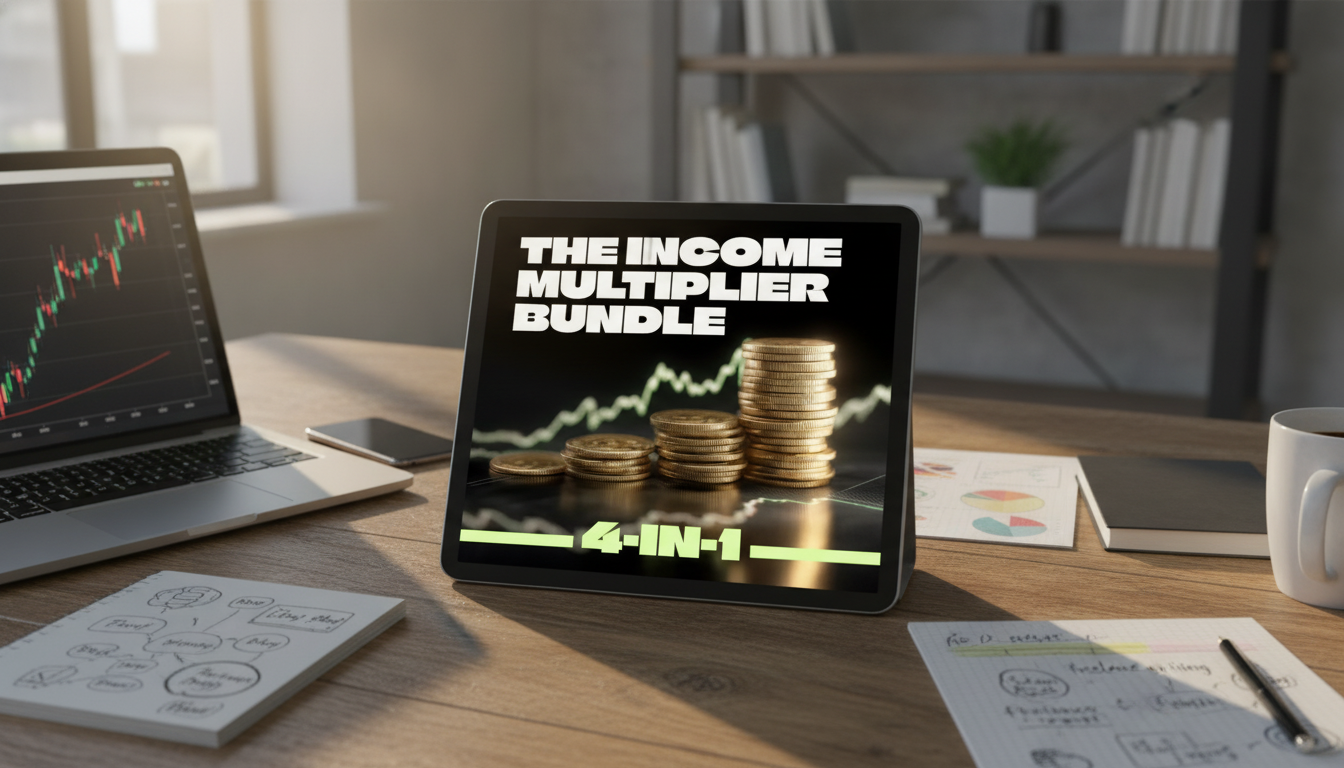
Growing income across more than one channel can reduce reliance on a single paycheck and create clearer, repeatable routines for saving, investing, and earning. The Income Multiplier Bundle is positioned as a practical 4-in-1 system that combines dividend-focused investing concepts, side-hustle planning, and an overall strategy layer so actions stay organized instead of scattered.
What’s Included in the 4-in-1 Bundle
The core promise of a “bundle” approach is simple: instead of mixing random tips from different places, you follow a structured set of materials designed to cover investing basics, dividend stock considerations, side-hustle setup, and a unifying plan.
- A clear separation between “earning more” (active streams) and “putting money to work” (passive/portfolio streams)
- Step-by-step routines to keep decisions consistent as income grows
- A repeatable framework meant to be revisited as you level up (start simple, then expand)
How Multiple Income Streams Work Together
Multiple streams are most effective when each has a specific job. Active streams typically create cash flow first, then investing becomes the allocation plan that turns extra cash into a longer-term asset base.
- Active streams can fund investing faster (cash flow first, then allocation).
- Dividend and long-term investing approaches are generally slower to start but can become more consistent over time.
- A single “strategy layer” helps decide what to prioritize based on time, risk tolerance, starting budget, and timeline.
One practical way to think about the system is: stabilize cash flow, build a buffer, then scale investing contributions. That order helps reduce the chance of needing to pull money out of investments during a rough month.
Dividend Stocks: Core Ideas to Understand Before Buying
Dividend investing can be appealing because it adds a cash component to returns, but dividends aren’t “free money.” They come from business performance and can be reduced or suspended. Before buying, it helps to know what actually makes a dividend safer (and what can make it riskier).
- Dividend yield vs. dividend sustainability: a high yield can sometimes signal higher risk, not higher quality.
- Diversification: spreading exposure across sectors and positions can reduce single-company risk.
- Total return matters: price change + dividends is the real scoreboard, not dividends alone.
- Basic metrics to learn: payout ratio, earnings stability, and dividend growth history.
- Practical caution: investing involves risk, including loss of principal; results aren’t guaranteed.
For beginner-friendly overviews of the basics, the U.S. SEC’s educational site is a solid starting point: Investor.gov (Investing Basics). For dividend-specific considerations, see FINRA’s dividend overview.
Dividend Stock Checklist (Quick Reference)
| Area to review | Why it matters | Simple check |
|---|---|---|
| Dividend history | Consistency can indicate stability | Has the company maintained or grown dividends across market cycles? |
| Payout ratio | Overpaying dividends can be unsustainable | Is the payout ratio reasonable relative to the industry? |
| Business fundamentals | Dividends come from business performance | Are revenue/earnings relatively steady? |
| Diversification | Concentrated bets raise risk | Is the portfolio spread across multiple companies/sectors? |
| Fees and taxes | Friction can reduce net returns | Are account fees low and tax implications understood? |
Side Hustles: Picking an Option That Fits Time, Skills, and Cash Needs
Side hustles work best when they match your real constraints: available hours, current skills, and how quickly you need cash. Instead of trying to do three things at once, pick one primary hustle, make it repeatable, then consider adding a second stream only after the first has steady processes.
- Skill-based services: freelance, consulting, tutoring, or creative services often start with low cost and fast feedback loops.
- Product-based hustles: reselling, print-on-demand, and digital products can scale, but usually require systems and upfront effort.
- Local/offline hustles: errands, pet services, and simple home services can be straightforward to start and helpful for immediate income.
For side income, basic record-keeping and tax awareness matter early. The IRS resource hub is useful for getting oriented: IRS Self-Employed Individuals Tax Center.
A Simple 30-Day Implementation Plan
A month is enough time to build momentum without overcomplicating the process. The goal is not perfection; it’s a working baseline you can improve.
Common Mistakes That Slow Progress
Who This Bundle Fits Best
Getting Started with the Bundle
Recommended Products (In Stock)
- The Income Multiplier Bundle | 4-in-1 Bundle | Multiple Income Streams, Dividend Stocks, Side Hustles & Strategy ($335.97)
- Dog Walking Waist Bag for Treats & Poop Bags ($17.51) — a simple add-on for pet-service side hustles that need hands-free storage.
- Vintage Design Fashion Shoulder Messenger Bag ($409.02) — useful for commuting, client meetings, and carrying work essentials while running a service-based hustle.
FAQ
Is this bundle suitable for beginners with no investing experience?
Yes. It’s designed to organize fundamentals and next steps so you can build skills in order, starting with core concepts before taking action. Investing still involves risk, so focus on understanding basics and making decisions that fit your timeline and tolerance for volatility.
How quickly can multiple income streams replace a full-time paycheck?
Timelines vary based on starting income, hours available, skill fit, market demand, and how much you can save and reinvest. The most reliable path is to focus on one stream until it’s consistent, then scale or add a second stream once the first is systemized.
Do dividend stocks provide guaranteed passive income?
No. Dividends can be reduced or suspended, and share prices can go down, so results are not guaranteed. Diversification, business fundamentals, and focusing on total return can help manage risk, but they can’t eliminate it.












Leave a comment