Minimalist Packing Planner: A Calm Carry-On Workflow
Minimalist Travel Packing Planner: Pack Light, Stay Organized, Travel Calm
Packing light doesn’t have to mean forgetting essentials or stressing over last-minute decisions. A minimalist approach pairs a repeatable system (categories, limits, and checks) with flexible outfit planning—so trips feel simpler from departure to return. This guide walks through a practical packing workflow and how a digital planner can keep everything tidy and easy to reuse.
Why minimalist packing feels easier on the road
A lighter bag changes the whole rhythm of travel. Fewer items means faster transitions through security lines, hotel check-ins, day trips, and the constant repacking that happens when you’re moving between places. With a smaller kit, decision fatigue drops too—there’s less time spent choosing outfits or digging for chargers and toiletries.
Minimalism also helps reduce the risk of lost baggage, and it often avoids baggage fees (especially on airlines with strict size limits). The goal isn’t “no duplicates ever,” though. Intentional duplicates—like an extra pair of socks or a second charging cable for a long travel day—can keep you comfortable without turning your bag into a storage unit.
The core rules: limits that make packing automatic
- Set a bag boundary: pack only what fits your chosen carry-on or personal item without forcing zippers.
- Use a simple capsule formula: pick a small color palette, mix-and-match tops, and include one “nice” outfit.
- One-in, one-out: if a new item goes in, remove something of a similar category.
- Plan laundry instead of packing extra: quick-dry fabrics + a small detergent plan beats multiple duplicates.
- Keep a permanent essentials kit: chargers, adapters, medications, travel documents, and a small first-aid set.
If you fly carry-on only, remember the basics for toiletries and liquids. The TSA’s 3-1-1 liquids rule is a simple checkpoint to keep your toiletry kit streamlined and compliant.
A step-by-step packing workflow that prevents overpacking
1) Start with the itinerary (not the closet)
List your trip length, activities, weather range, dress codes, and transit time. One conference dinner and one rainy walking day can dictate more than “seven days away” ever will.
2) Draft outfits first, then count items
Instead of packing “pieces,” sketch outfit combinations and count the actual items needed. This is where “just in case” clothes usually sneak in—if it doesn’t fit an outfit, it has to earn its spot by solving a real problem.
3) Lock in footwear early
Shoes are weighty and space-hungry. Choose one primary pair you’ll wear most days and add one optional pair only if the trip demands it (hiking, formal event, snow, etc.).
4) Build around daily carry
Your daily essentials set the tone for how calm travel feels: wallet, phone, keys, sunglasses, water bottle, snacks, and any tickets/IDs. Keeping these in one consistent place reduces frantic gate rummaging and “where did I put that?” moments.
5) Do a 10-minute floor test
Lay everything out, remove 20%, then add back only what fixes a specific gap. This quick exercise trims bulk while preserving comfort.
6) Finish with a pre-departure checklist
Include documents, payment backups, home tasks (trash, thermostat, plants), and device charging. For health planning and prevention, the CDC’s travel guidance is a strong reference point: CDC Travel Health (Pack Smart and Prepare).
Reusable digital planning: keep lists, outfits, and reminders in one place
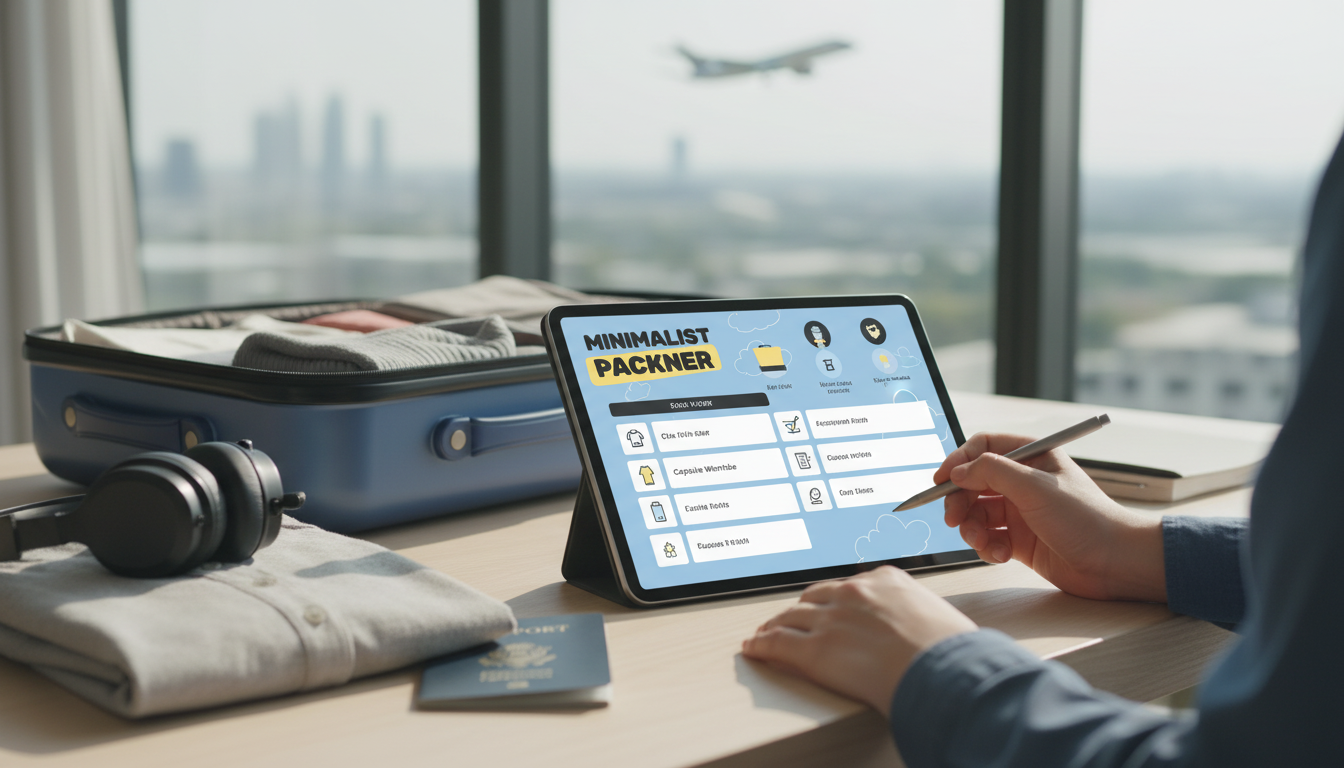
For a ready-to-reuse system, the Minimalist Travel Packing Planner | Digital Packing Guide for Light, Smart & Stress-Free Trips helps keep checklists, outfit planning, and pre-departure reminders together—especially useful if you travel often or tend to forget small essentials.
Packing list template by trip length (adjust for climate and activities)
| Trip length | Tops | Bottoms | Outerwear | Shoes | Sleep/active | Notes |
|---|---|---|---|---|---|---|
| 2–3 days | 2–3 | 1–2 | 1 light layer | 1 pair (+ optional) | 1 set | Plan 1 nicer outfit using the same shoes |
| 4–6 days | 4–5 | 2–3 | 1 layer + rain option | 1 pair (+ optional) | 1–2 sets | Schedule one laundry refresh or sink wash |
| 7–10 days | 5–7 | 3–4 | 1 warm layer + rain option | 1–2 pairs | 2 sets | Pack for a week and wash once instead of doubling items |
Avoiding the most common “heavy bag” mistakes
For airline baggage expectations (and why “one bag” can vary by carrier), it also helps to review general guidance like IATA’s overview of baggage: IATA: Baggage (General Guidance).
Recommended tools and add-ons that support a light setup
- Digital planner for repeatable checklists and outfit planning: Minimalist Travel Packing Planner | Digital Packing Guide for Light, Smart & Stress-Free Trips keeps your system consistent from trip to trip.
- A structured everyday bag for documents and in-transit essentials: the Vintage Design Fashion Shoulder Messenger Bag can help separate “grab-fast” items (passport, wallet, earbuds) from the main luggage compartment.
- A small hands-free waist bag: the Dog Walking Waist Bag for Treats & Poop Bags also works as a compact travel side pouch for phone, boarding pass, and tickets when you want both hands free.
FAQ
How far in advance should packing start to stay stress-free?
Build your list 5–7 days before departure, do laundry and any refills 2–3 days out, pack the day before, and run a final checklist the morning of travel for documents, chargers, and last-minute home tasks.
How many outfits are enough for a week-long trip?
A capsule plan usually needs about 4–6 tops, 2–3 bottoms, and one nicer outfit, then schedule one laundry refresh (sink wash or laundromat) instead of packing seven complete outfits.
What’s the easiest way to stop forgetting small essentials?
Keep a reusable master checklist plus an always-packed pouch for chargers, documents, and medications. Using templates you can copy for each trip makes it harder for small items to slip through the cracks.









Leave a comment