Modern Etiquette Micro-Course: Texting, RSVPs & Social

Modern Etiquette Micro-Course for Digital Life and Everyday Politeness
Good manners haven’t disappeared—they’ve just moved into group chats, comment threads, and calendar invites. A short, practical etiquette refresh can make communication clearer, reduce awkward moments, and help relationships feel easier at home, work, and online. This micro-course format is designed for quick wins: simple rules, real examples, and printable guidance that can be used immediately.
What “modern etiquette” covers (and why it feels harder than it should)
Modern etiquette is less about rigid rules and more about predictable behaviors that reduce friction. When people can anticipate how you’ll communicate—clearly, kindly, and on time—plans run smoother and misunderstandings shrink.
Digital communication makes this trickier because tone and context disappear. A short reply can read as cold; a delayed response can feel like a snub; a public comment can land like a callout. Consistency matters more than formality: be considerate, timely, and clear. A useful mindset shift is to prioritize respect, consent (especially online), and responsiveness—so people aren’t left guessing where they stand.
A micro-course approach: small lessons that fit real schedules
Traditional etiquette books can be thorough but hard to finish. A micro-course approach breaks etiquette into small modules—one situation at a time—so it’s easier to apply when life is moving fast.
- Short lessons focused on real scenarios (texting, RSVPs, social media norms, everyday politeness).
- Printable, digital format you can pull up before replying to an invite or sending a message.
- Repeatable habits that reduce “what do I say?” moments and boost confidence.
- Useful for personal refreshers, workplace soft-skills support, or gifting.
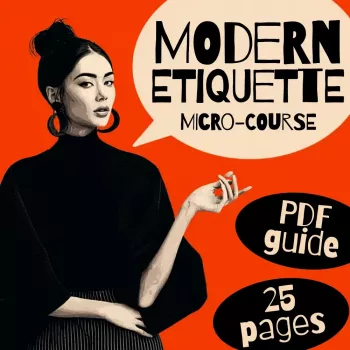
If you want an easy, ready-to-use refresher, the Modern Etiquette Micro-Course | Printable Digital Etiquette Guide | Texting, Social Media, RSVPs & Everyday Politeness Tips is designed for quick check-ins in the moments that usually cause hesitation.
Texting etiquette that keeps conversations smooth
Texting is fast, but it’s still a relationship tool—personal and professional. The goal is fewer loose ends and fewer accidental slights.
- Response timing: “Soon” matters for confirmations, changes of plans, or direct questions. For casual chats, later is fine—just avoid letting time-sensitive threads languish.
- Clarity over speed: One message with the key details (who/what/when/where) beats eight fragmented texts that force the other person to assemble the plan.
- Tone tools: Punctuation and short replies can read as harsh. If a message could be interpreted two ways, add one softener (“Got it—thanks!”) rather than overexplaining.
- Boundaries and consent: Avoid late-night non-urgent texts. Respect “Do Not Disturb” time, and don’t pressure others about read receipts or instant responses.
- Group chat manners: Stay on topic, avoid over-tagging, and don’t force immediate decisions when people are working or commuting.
Social media manners: considerate posting, commenting, and messaging
Social platforms can feel casual, but the stakes are often higher: bigger audiences, more permanence, and more opportunities for misinterpretation. Pew Research tracks how widespread social media use is—meaning a “small” post can reach more people than intended (Pew Research Center — Social Media Fact Sheet).
RSVP etiquette: clearer yes/no answers and fewer awkward follow-ups
Quick etiquette fixes for common RSVP moments
| Situation | Best response | What to avoid |
|---|---|---|
| You can’t attend | Reply promptly with a clear no and a warm note | Waiting until the last minute or leaving it on read |
| You’re unsure | Ask one clarifying question, then set a decision deadline | Stringing the host along with repeated “maybe” messages |
| You need to change your answer | Notify the host immediately and apologize briefly | Silently not showing up or sending a casual same-day cancellation |
| You’re bringing a guest | Confirm the plus-one is invited before assuming | Adding a guest without asking or changing headcount late |
Everyday politeness: small habits that improve how people feel around you
For workplace situations, classic guidance still applies: professionalism, respect, and tact—updated for modern channels like chat and video calls (Emily Post Institute — Business Etiquette).
How to use a printable etiquette guide in real time
Pairing simple etiquette tools with an organized everyday carry setup can help, too. A structured bag keeps your notebook, event cards, and essentials handy when you’re moving between work and social plans—like the Vintage Design Fashion Shoulder Messenger Bag.
Who benefits most from a modern etiquette refresh
A practical option: Modern Etiquette Micro-Course (printable digital guide)
When you want etiquette guidance that feels current—without turning everyday life into a rulebook—a scenario-based guide is the most usable format. The Modern Etiquette Micro-Course | Printable Digital Etiquette Guide | Texting, Social Media, RSVPs & Everyday Politeness Tips is built around real moments: texting tone, social media consent, RSVP clarity, and everyday politeness that helps relationships feel lighter and more predictable.
FAQ
Is a modern etiquette guide useful for work communication as well as personal life?
Yes—modern etiquette overlaps heavily with professional communication: clear wording, reasonable response timing, and respectful boundaries. Practical scripts and tone guidance can be adapted for coworkers, clients, friends, and family.
What’s the difference between texting etiquette and social media etiquette?
Texting is usually private and conversational, while social media is more public, more permanent, and often reaches a wider audience. Social media also involves extra consent considerations—like tagging, resharing, and posting other people’s information.
How can someone decline an invitation politely without giving too many details?
A simple formula works well: thank them, give a clear “can’t make it,” and add a warm closing (optionally with a brief reason). Respond promptly and avoid overexplaining or leaving the host unsure.










Leave a comment