Practice Critical Thinking: Frameworks, Teasers, Decisions
Clearer Thinking for Real Life: What Critical Thinking Practice Actually Changes
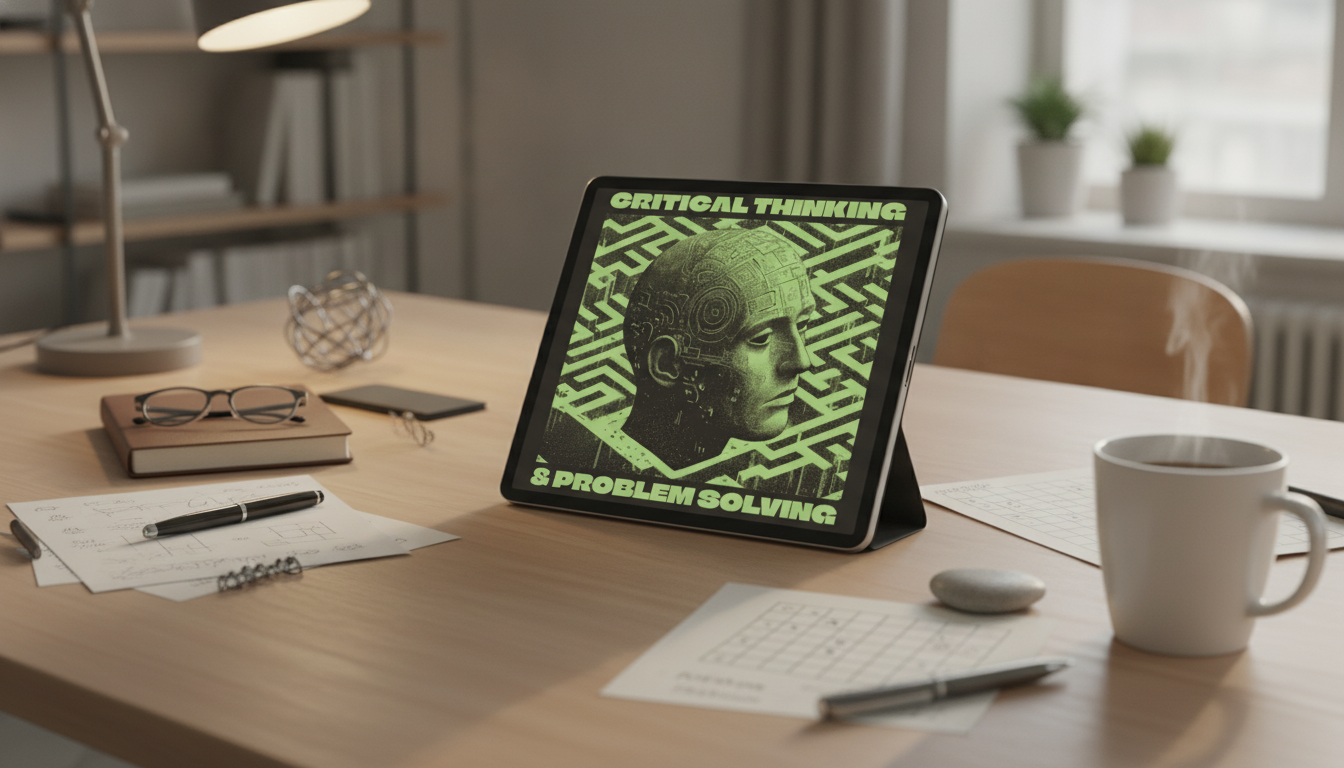
Better decisions rarely come from “more information” alone—they come from clearer thinking. The Critical Thinking & Problem Solving eBook (Digital Download) is designed to strengthen everyday reasoning with practical frameworks, bite-sized brain teasers, and repeatable problem-solving habits that transfer to work, school, and personal choices. Instead of trying to memorize rules, you build a toolkit: how to define problems precisely, test assumptions, and choose next steps that reduce uncertainty.
Critical thinking is commonly described as disciplined, reflective judgment—evaluating reasons and evidence before deciding what to believe or do (see the APA Dictionary of Psychology definition). In daily life, that often looks like pausing long enough to ask: “What do I know, what am I guessing, and what would change my mind?”
What This eBook Helps Improve
- Spot common thinking traps (assumptions, overconfidence, confirmation bias) before they steer choices off course
- Break messy problems into smaller, solvable parts using simple repeatable steps
- Strengthen logic and reasoning through short exercises that build mental flexibility
- Make decisions under uncertainty by weighing tradeoffs, risks, and opportunity costs
- Communicate solutions more clearly by structuring arguments and evidence
These skills matter because real decisions are made with limited time, limited attention, and incomplete information—what researchers call “bounded rationality” (a helpful overview appears in the Stanford Encyclopedia of Philosophy).
What’s Included in the Digital Download
- Guided lessons that move from fundamentals (clarifying the question) to advanced habits (testing alternatives and second-order effects)
- Brain teasers and mini-challenges designed to practice pattern recognition, deduction, and creative reframing
- Prompts and checklists that can be reused for daily decisions, planning, and troubleshooting
- A self-paced format suitable for quick sessions or deeper study blocks
Quick Overview of Components
| Component | How it’s used | Best for |
|---|---|---|
| Decision frameworks | Follow step-by-step prompts to compare options and consequences | Big choices and recurring dilemmas |
| Brain teasers | Practice logic, patterning, and lateral thinking in short bursts | Mental agility and focus |
| Problem breakdown worksheets | Define the problem, constraints, and possible causes | Troubleshooting and planning |
| Reflection checks | Review outcomes to improve next decisions | Building long-term judgment |
A Simple Problem-Solving Routine to Practice
When a problem feels overwhelming, the goal isn’t to “think harder”—it’s to think in a cleaner sequence. A simple routine prevents mental shortcuts from taking over.
- Define the problem in one sentence and separate it from symptoms (what is happening vs. why it’s happening)
- List constraints (time, budget, tools, people) and success criteria (what “good” looks like)
- Generate at least three options before evaluating—this reduces “first idea” bias
- Test options against evidence: what is known, what is assumed, and what would change the conclusion
- Choose the next smallest action that produces information (a low-risk test, a quick prototype, a conversation)
That last step—choosing an action that creates feedback—often makes the biggest difference. It turns “analysis” into learning, and learning into better decisions.
Brain Teasers That Build Real-World Skills
Brain teasers work best when they’re not just trivia. The right puzzles train habits that show up in meetings, negotiations, planning, and even everyday conversations.
- Logic puzzles reinforce careful reading, step-by-step deduction, and avoiding premature conclusions
- Pattern challenges train attention and improve the ability to notice what others miss
- Lateral-thinking prompts encourage reframing—useful when a problem feels stuck or overly constrained
- Timed exercises develop calm, structured thinking under mild pressure
To keep practice grounded, it helps to pair a puzzle with one quick reflection question: “Where could this same mistake show up in real life?” That bridge is where entertainment becomes a skill.
Using Critical Thinking for Smarter Everyday Decisions
- For purchases: compare total value, not just price—include durability, replacement costs, and time saved
- For work projects: identify the real bottleneck and measure progress with one clear metric
- For relationships: clarify needs and expectations, then check interpretations against facts
- For health and habits: focus on systems (environment and routine) rather than willpower alone
- For information intake: verify claims using sources, methods, and incentives before sharing or acting
When misinformation is the problem, structured debunking methods can help clarify what’s true, what’s misleading, and why a claim “feels” persuasive (see The Debunking Handbook 2020 for a research-based approach).
Who This eBook Fits Best
Digital Download Tips and Simple Study Plan
If you like a “grab-and-go” setup, pairing a download with a dedicated carry option can make it easier to practice anywhere. A compact everyday bag such as the Vintage Design Fashion Shoulder Messenger Bag can hold a notebook and essentials for quick reflection sessions. For on-the-move routines, small organizers like the Dog Walking Waist Bag for Treats & Poop Bags can double as a simple pouch for keys, cards, and a pen—useful when practicing short checklists away from your desk.
Recommended Digital Pick
For a focused upgrade to everyday judgment, start with the Critical Thinking & Problem Solving eBook – Digital Download Guide for Smarter Decision Making, Brain Teasers & Life Skills Ebook. It’s built for self-paced progress: lessons that clarify how to think, puzzles that make the habits stick, and reusable prompts that fit real decisions.
FAQ
Is this eBook suitable for beginners who feel “not good at logic”?
Yes. It starts with approachable fundamentals and guided steps, then builds difficulty gradually through practice-focused exercises that make reasoning feel more natural over time.
How long does it take to notice improvement in decision making?
Consistency matters more than long sessions. Many people notice clearer thinking within a few weeks of short daily practice, especially when using checklists and quick reflection after decisions.
Can the brain teasers be used as quick daily training?
Yes. The puzzles are designed for brief sessions and can be repeated to reinforce patterns, deduction, and reframing—skills that translate well to everyday problem-solving.











Leave a comment