Screen-Free Family Bonding: Stronger Together Pack
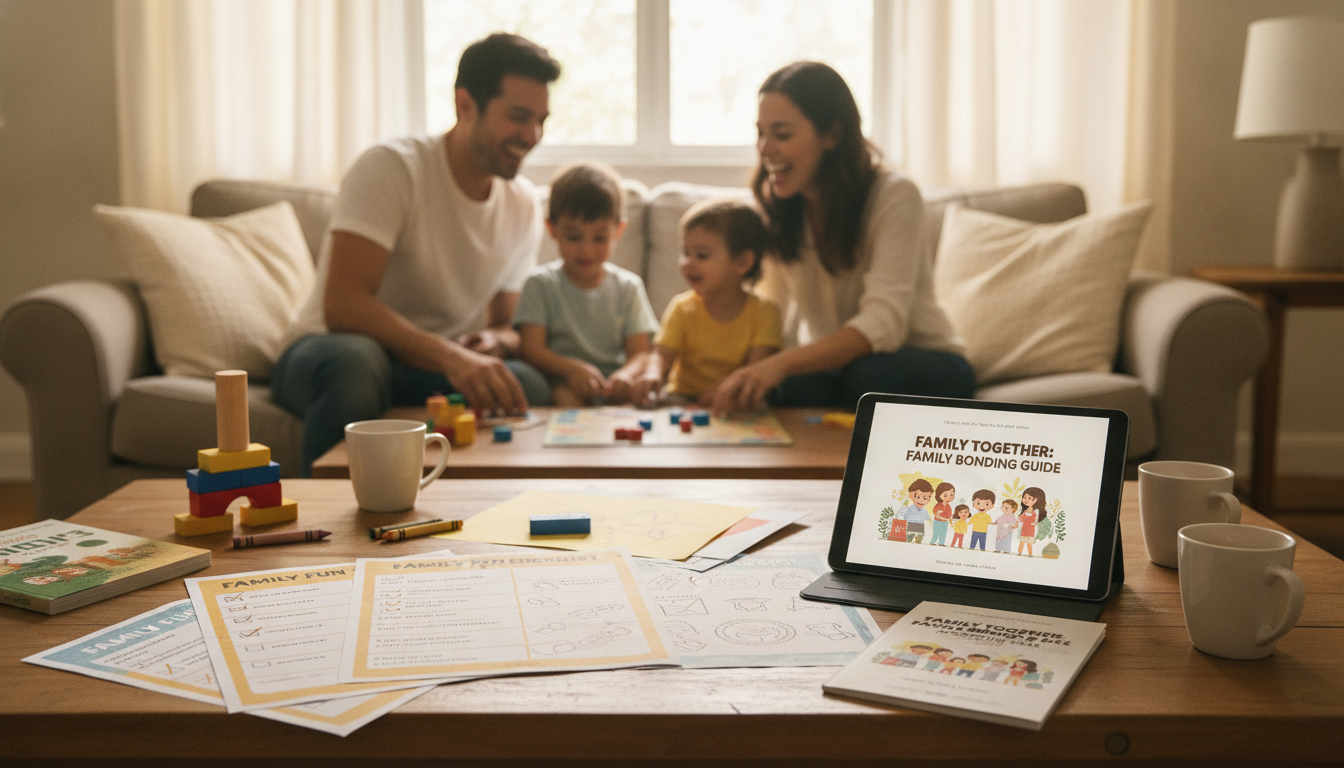
Stronger Together: Screen-Free Connection That Actually Fits Real Life
Busy schedules, different ages, and everyday stress can make quality time feel harder than it should. Stronger Together: Family Bonding Pack is a digital guide with printable activities designed to help kids and parents connect through simple, repeatable moments—indoors, outdoors, and in between—supported by a practical family time checklist and eBook structure. Instead of planning a “perfect” family night, it focuses on small wins: a quick prompt after dinner, a cooperative challenge before bedtime, or a short walk where everyone feels noticed.
Research consistently supports what parents already sense: kids thrive with warm connection, play, and dependable routines. Resources like the American Academy of Pediatrics’ Positive Parenting Tips and the American Psychological Association on the importance of play highlight how everyday interactions build communication, confidence, and resilience.
What the Family Bonding Pack Is
Stronger Together is a digital family activities guide built for parents and kids to use together. It includes printable pages that work for quick moments, weekends, or planned family nights, with a mix of at-home and outdoor connection ideas to match energy levels and weather.
Its standout feature is the checklist-style structure: rather than holding everything in your head, you can pick an activity, print it (or use it digitally), and start. That simple format reduces decision fatigue, especially on nights when everyone’s tired and screens feel like the easiest option.
Who It Helps Most (and Why)
This pack is especially helpful for families who want meaningful connection in 10–30 minute blocks. It’s designed for low-prep, high-return time—short enough to be realistic, but intentional enough to feel different from “hanging out in the same room.”
- Limited-time households: get connection without needing a full event or outing.
- Parents reducing default screen time: replace “What should we do?” with a ready-to-go plan.
- Mixed-age families: activities can be scaled up or down so toddlers, elementary kids, and teens can all participate.
- Caregivers supporting social-emotional growth: conversation prompts and cooperative play help kids practice naming feelings and working together.
- Families in transition: a new school year, move, new sibling, or schedule change often calls for simple routines that rebuild “us” time.
How to Use It Week to Week
A practical rhythm beats an ambitious plan. A strong starting point is two short activities on weekdays plus one longer weekend activity. Use the checklist to rotate across themes—conversation, teamwork, gratitude, movement, creativity—so connection doesn’t get stale.
Keep materials minimal: printer paper, markers, tape, a ball, sidewalk chalk, or a notebook. Many families find it helpful to create a single “go-to” spot (a binder or one drawer) where printed pages live. Then, end each activity with a two-minute reflection prompt so the connection carries into the rest of the day.
Sample 7-Day Connection Plan (Adjust by Age and Schedule)
| Day | Time Needed | Setting | Activity Type | Quick Prompt to End |
|---|---|---|---|---|
| Mon | 10–15 min | At home | Conversation + check-in | “What was one small win today?” |
| Tue | 15–20 min | At home | Cooperative challenge | “What helped us work as a team?” |
| Wed | 10 min | Outdoor/porch | Movement break | “How does your body feel now?” |
| Thu | 20–30 min | At home | Creative build or drawing | “What should we try next time?” |
| Fri | 15 min | At home | Gratitude + kindness | “Who can we encourage tomorrow?” |
| Sat | 30–60 min | Outdoor | Scavenger-style connection walk | “What did we notice that surprised us?” |
| Sun | 15–25 min | At home | Reset + plan | “What do we want more of this week?” |
At-Home Activities That Feel Special Without Extra Prep
The best at-home connection ideas don’t require a big mood shift—just a clear starting point. Pick-one prompt nights are a favorite because they’re fast and surprisingly meaningful: “high/low,” “rose/thorn/bud,” or “two truths and a wish.”
Outdoor Connection Ideas That Don’t Require a Big Outing
Making It Work for Different Ages
Stronger Together: What You Get and How It Fits Into Real Life
Stronger Together: Family Bonding Pack is designed for real homes: you can access it digitally and print only what you’ll use. The activities support connection over perfection, and the checklist format makes it easier to start (and easier to repeat) even during busy seasons.
If you’re building a simple “grab-and-go” family routine, a few practical add-ons can make logistics smoother. A Vintage Design Fashion Shoulder Messenger Bag can hold a notebook, markers, and printed pages for car time or waiting rooms. For family walks and park time, the Dog Walking Waist Bag for Treats & Poop Bags works well as a hands-free pouch for small essentials. And if your connection plan includes outings, the Child Car Booster Seat can support safer, more comfortable trips when age-appropriate.
FAQ
Is this suitable for multiple kids of different ages?
Yes. Many activities can be scaled with shorter turns for younger kids, “helper roles” for elementary ages, and layered difficulty so older siblings can take on more complex parts without taking over.
Do the activities require special supplies?
No. Most options use common household basics like paper, markers, tape, and a notebook, plus simple outdoor items like sidewalk chalk or a ball. Many activities can also be followed directly on a device without printing.
How much time should be set aside for family bonding activities?
Plan for 10–30 minutes most days, with a longer session on weekends if it feels doable. Consistency matters more than length, so starting small and repeating what works is often the best approach.









Leave a comment